Description
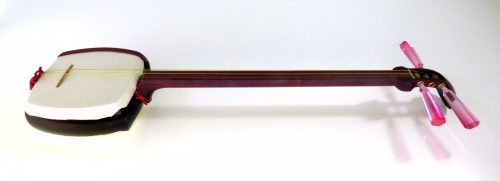
The “Brand New Vintage” Tsugaru Shamisen
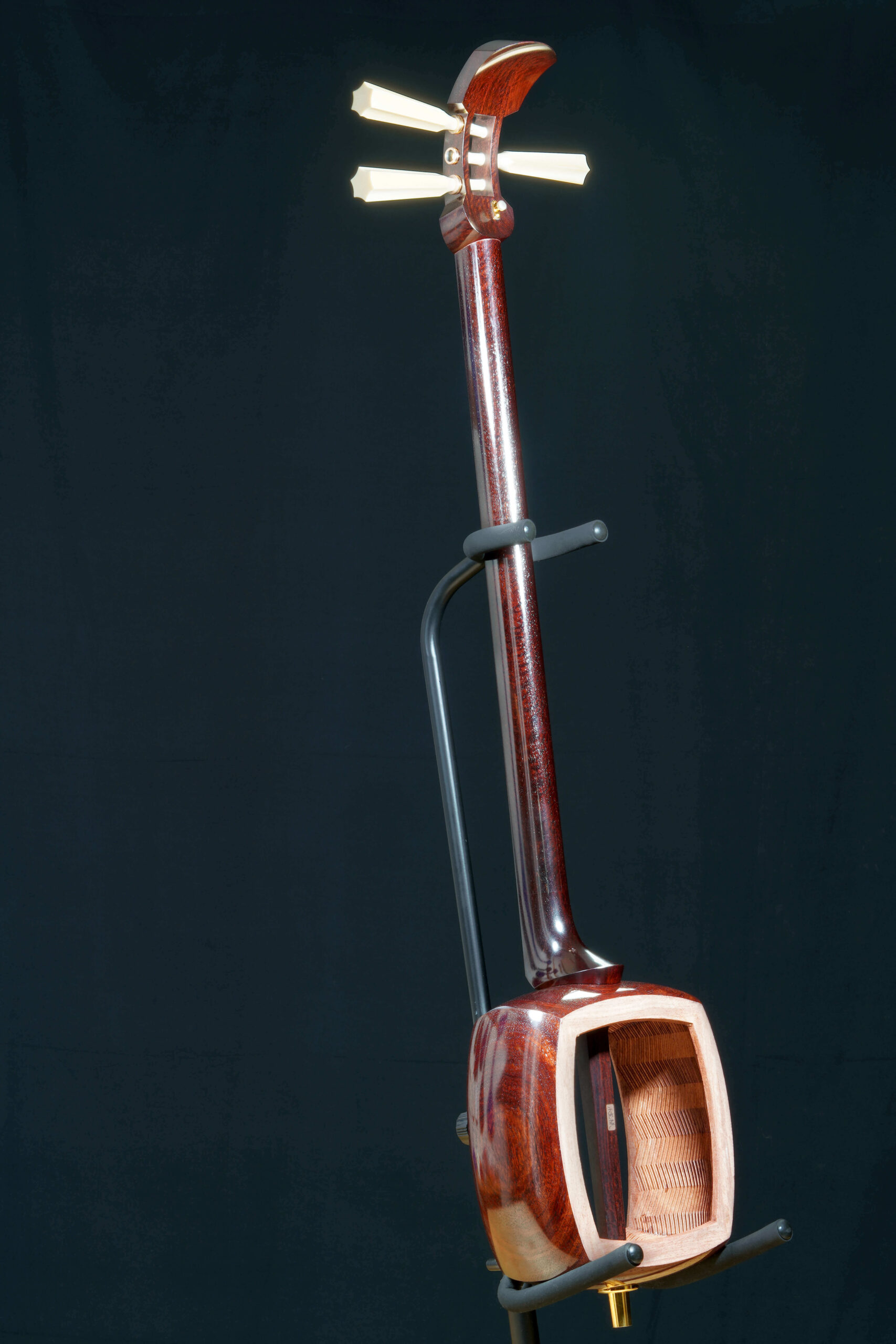
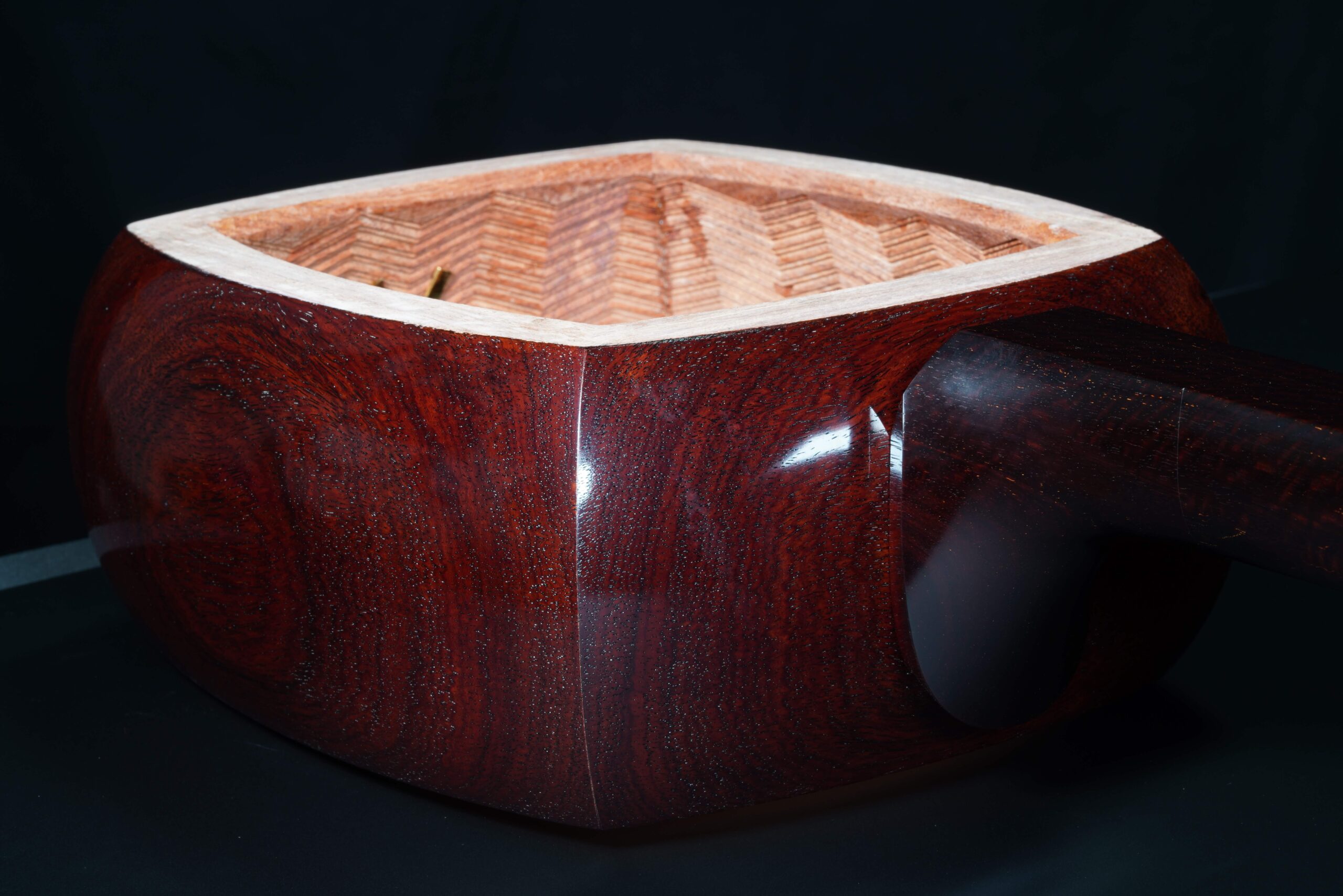
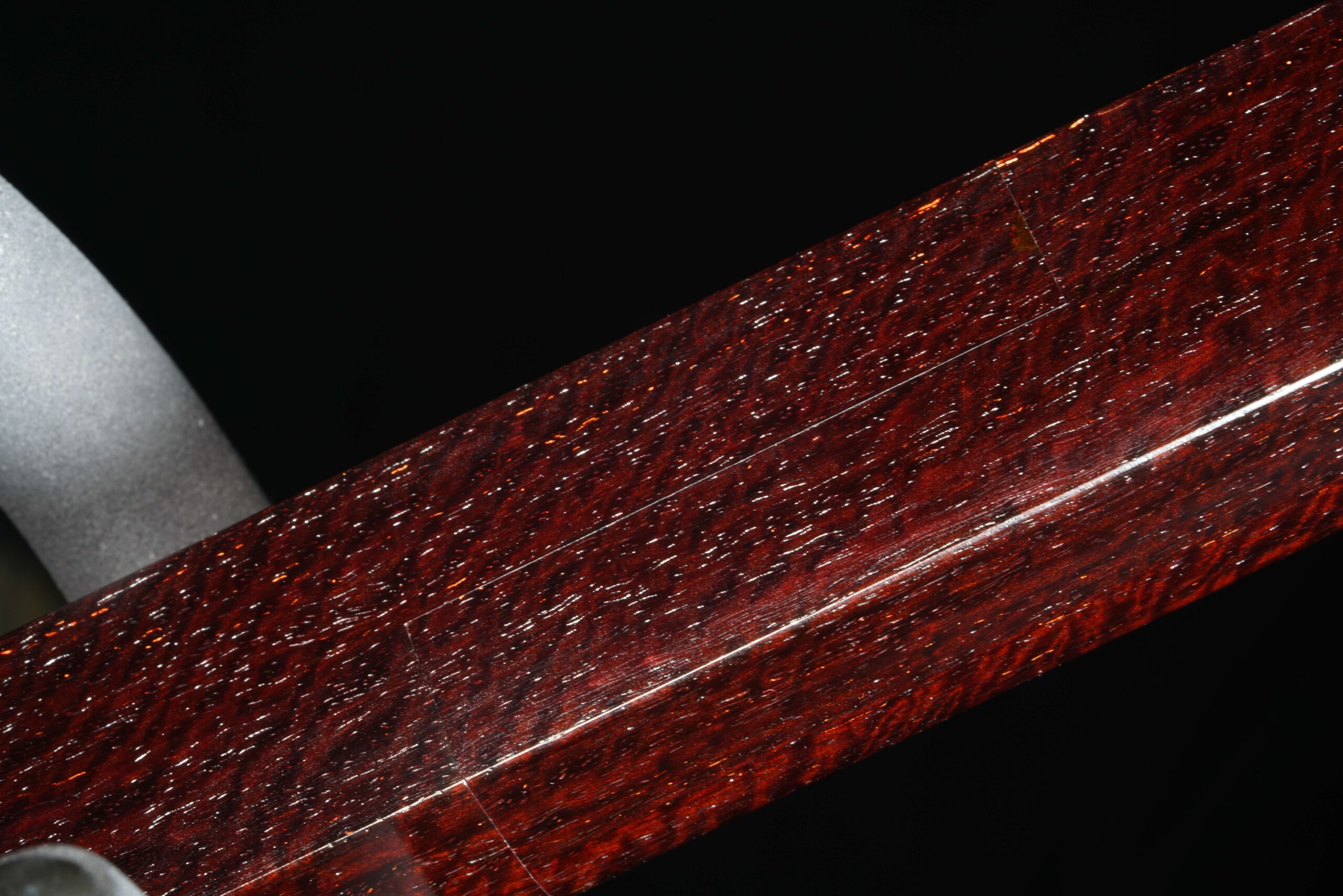
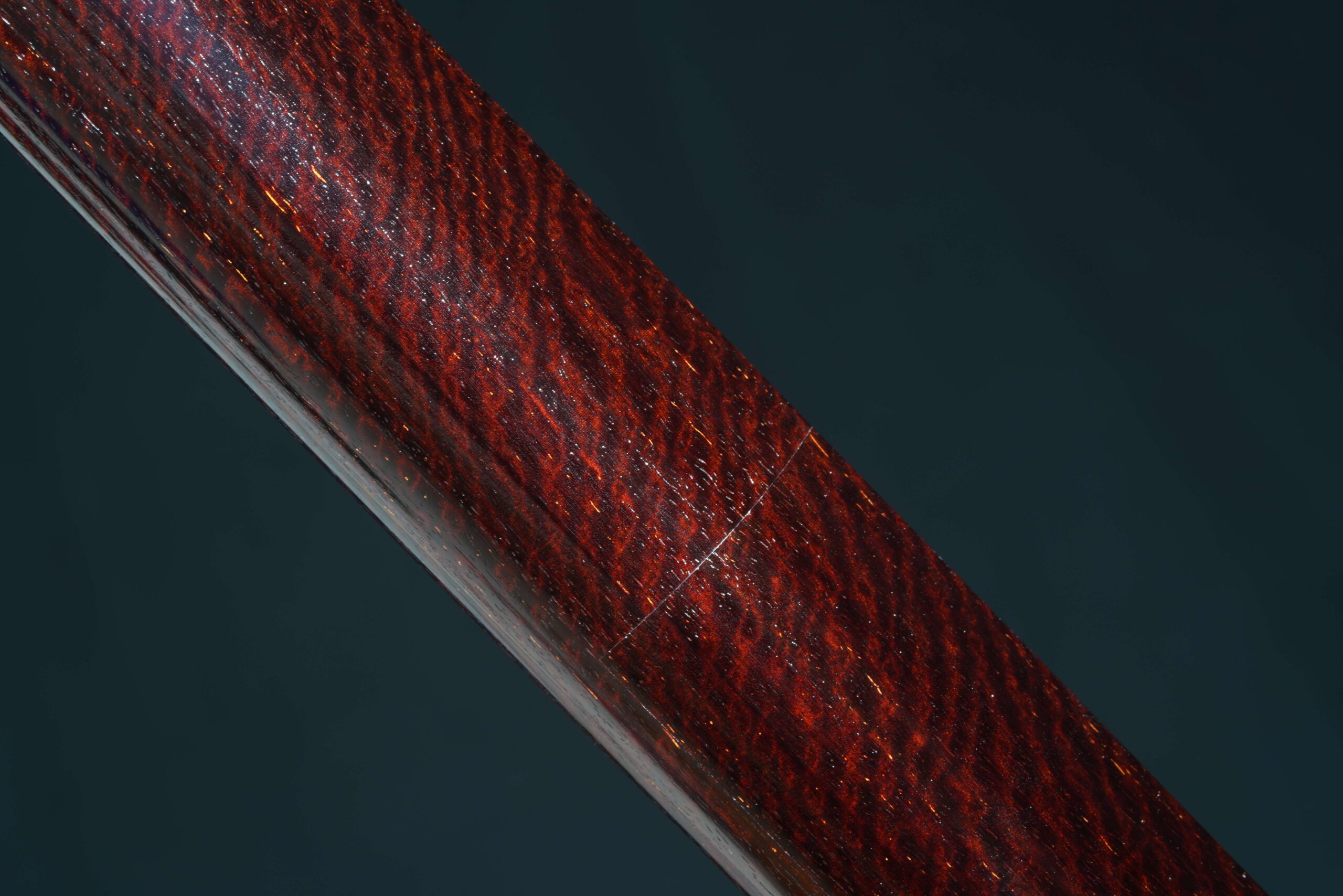
This instrument is one of the rarest gems, and represents a unique opportunity to own a piece of shamisen history in the condition as if it were owned in the era it was made. The wood comes from a time when highly figured kouki was abundant (of which it is no longer), and the fit and finish are indistinguishable from a brand-new Tokyo Wagakki professional model.
The Wood: 1980s “Golden Age” of Kouki
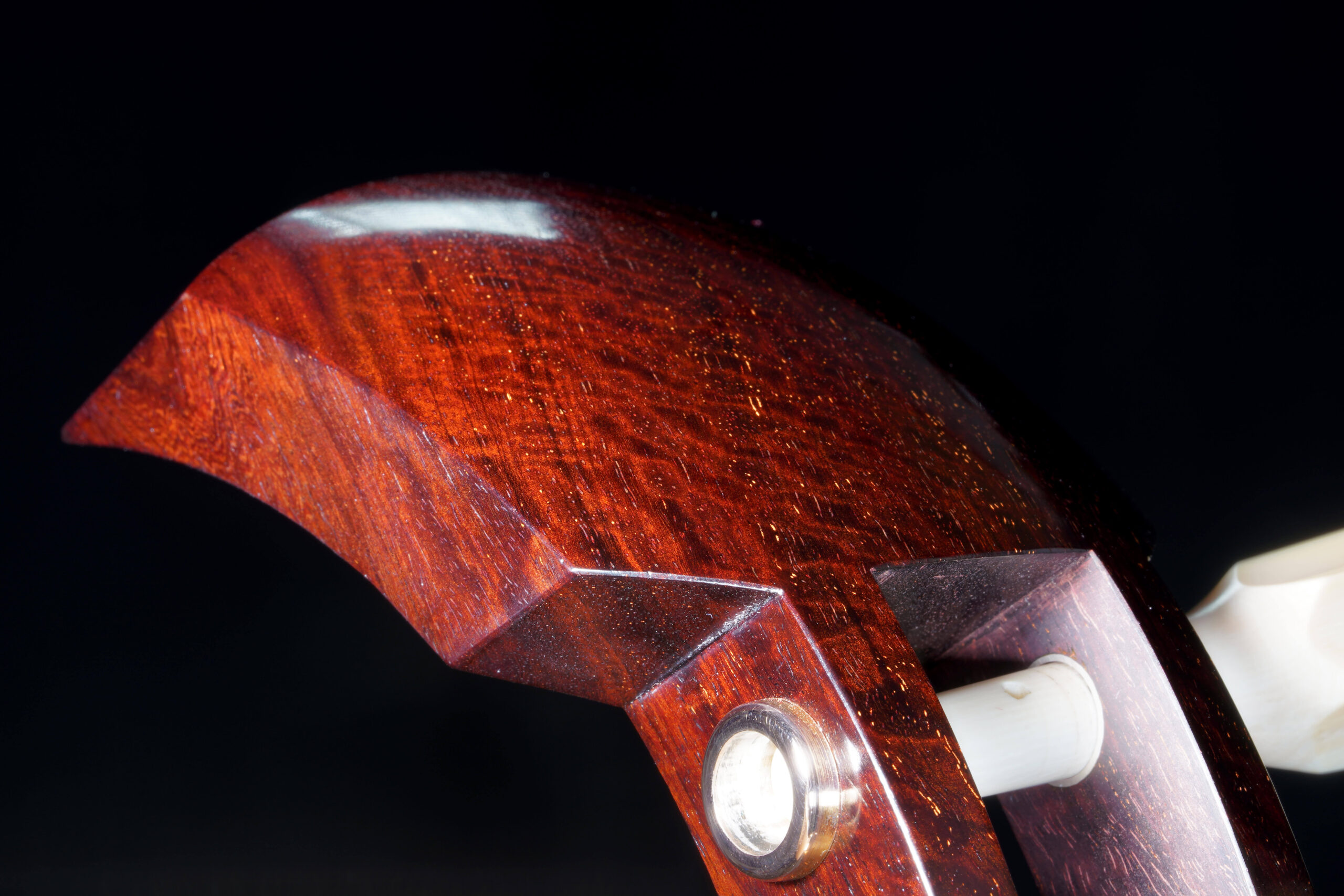
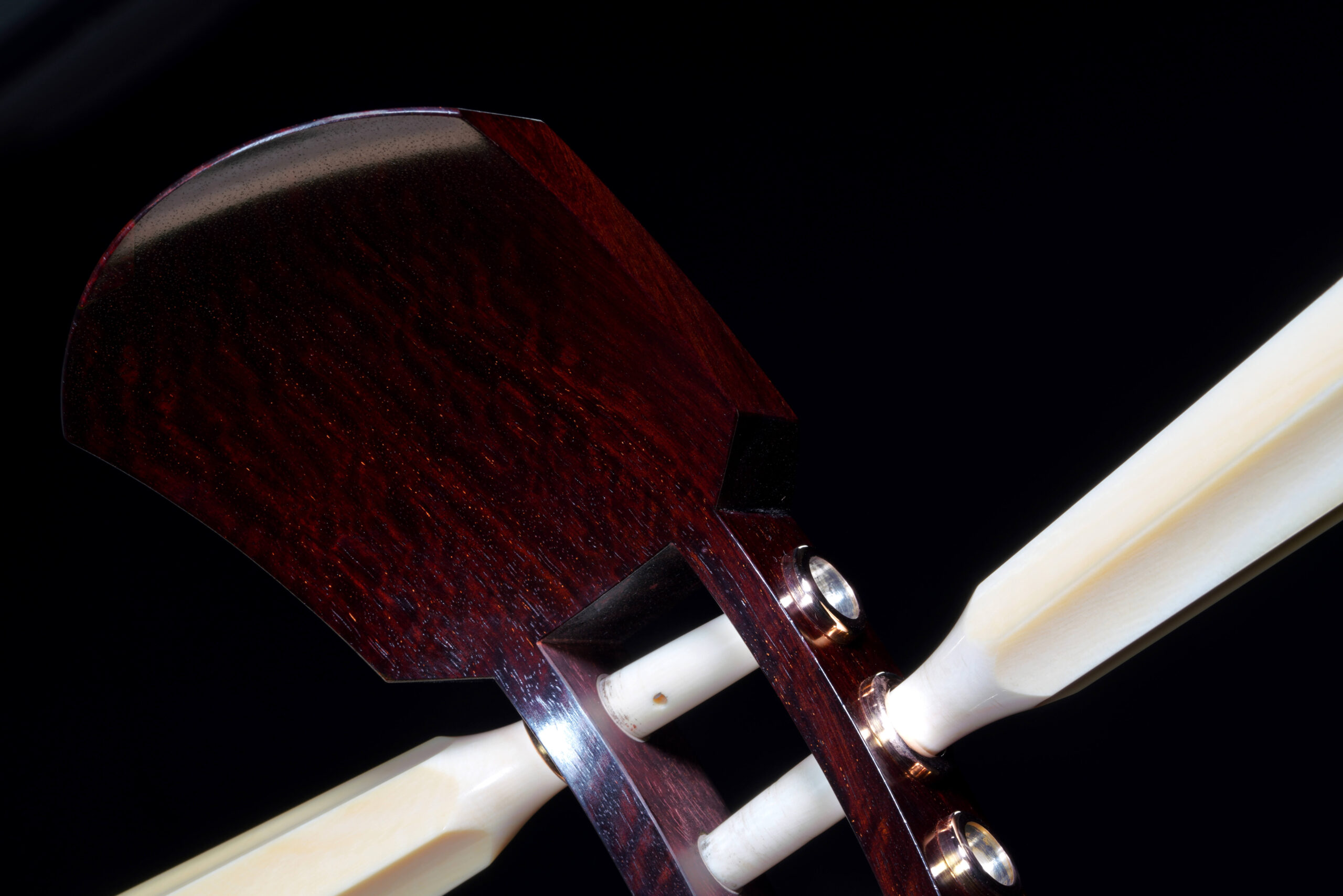
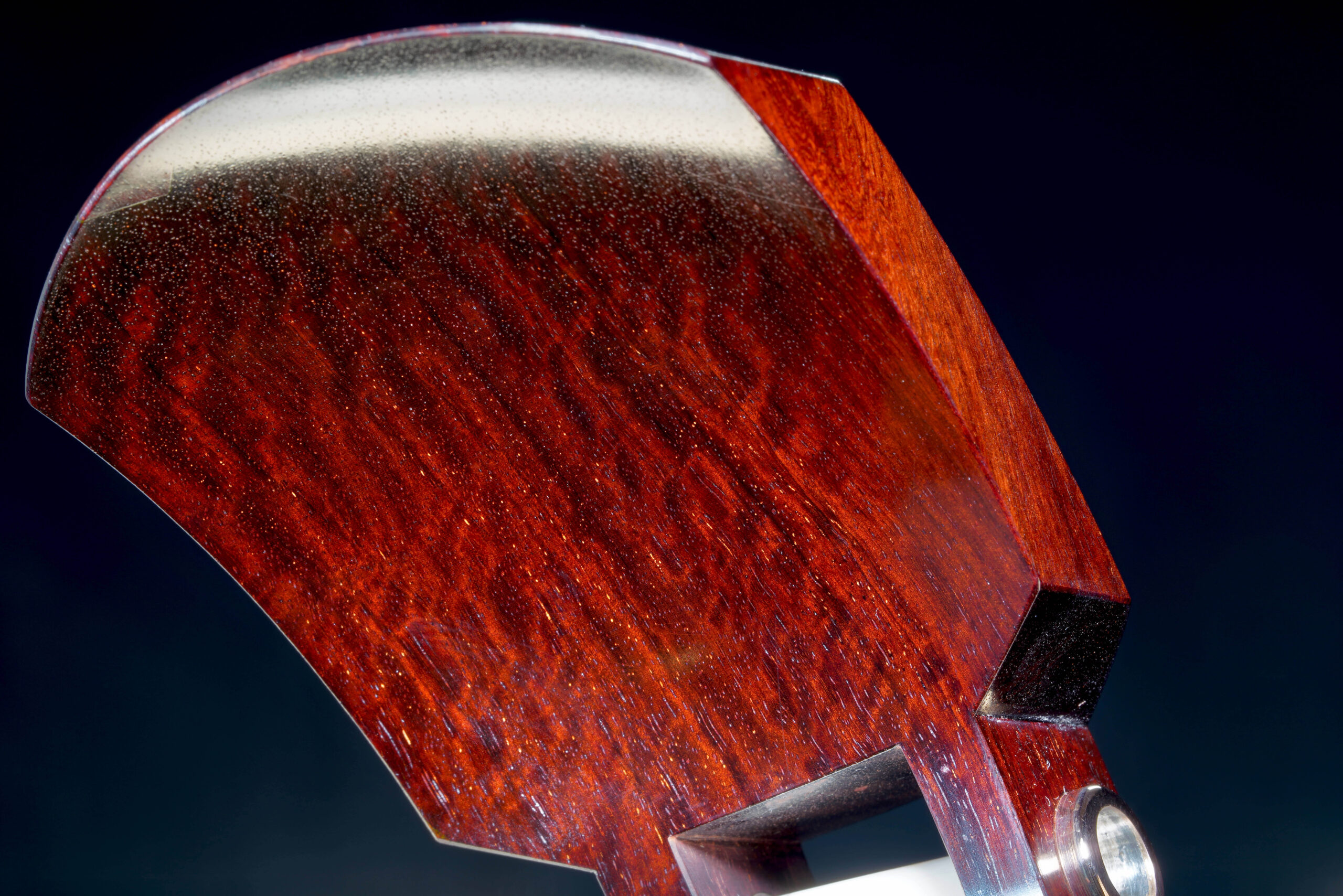
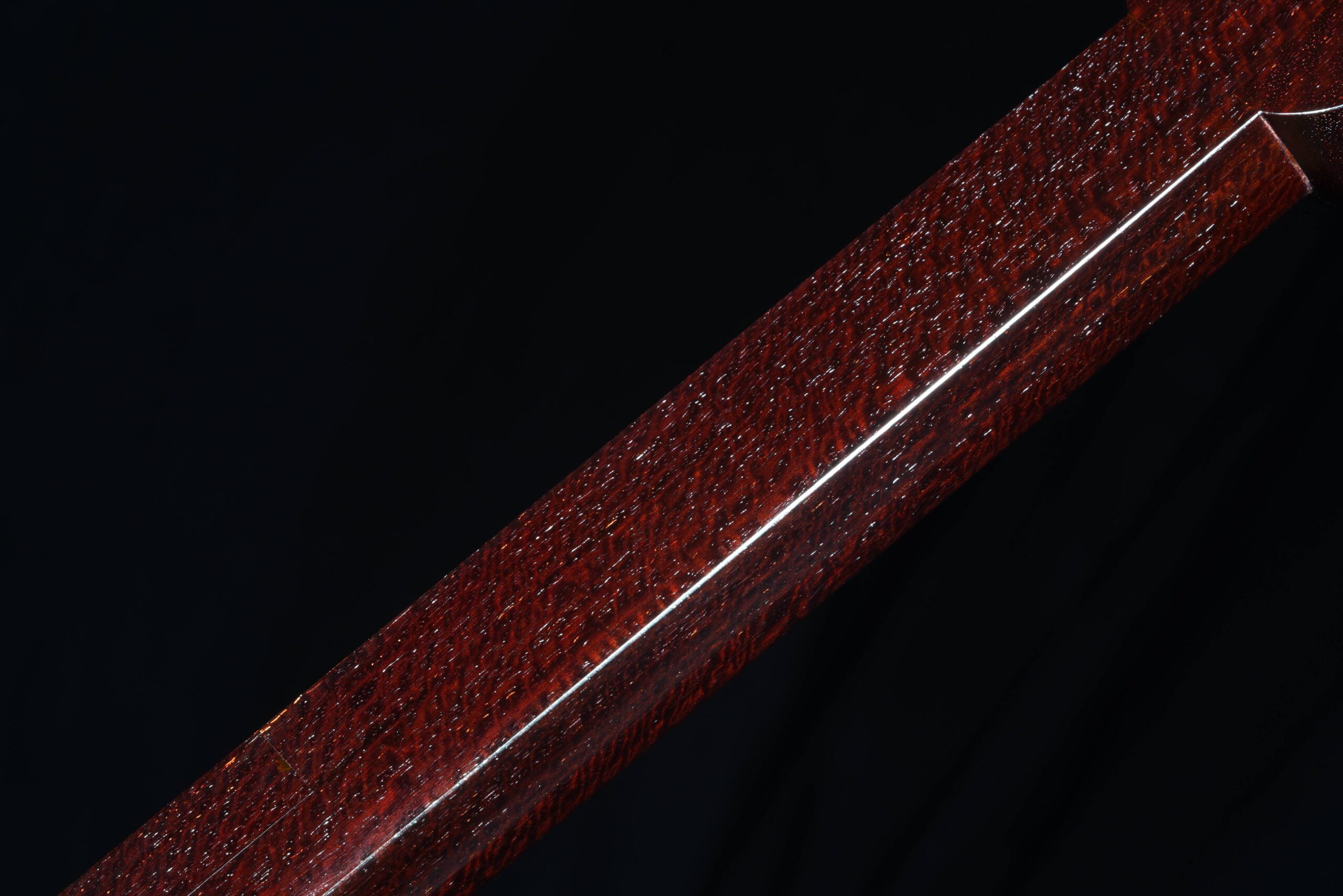
In the 1980s, shamisen makers had access to old-growth Indian Red Sandalwood (Kouki) of a quality that is no longer available today.
Expert Restoration by Tokyo Wagakki
This wasn’t just cleaned; it was rebuilt. The craftsmen at Tokyo Wagakki spent as much time refreshing this instrument as they would building a new one.
-
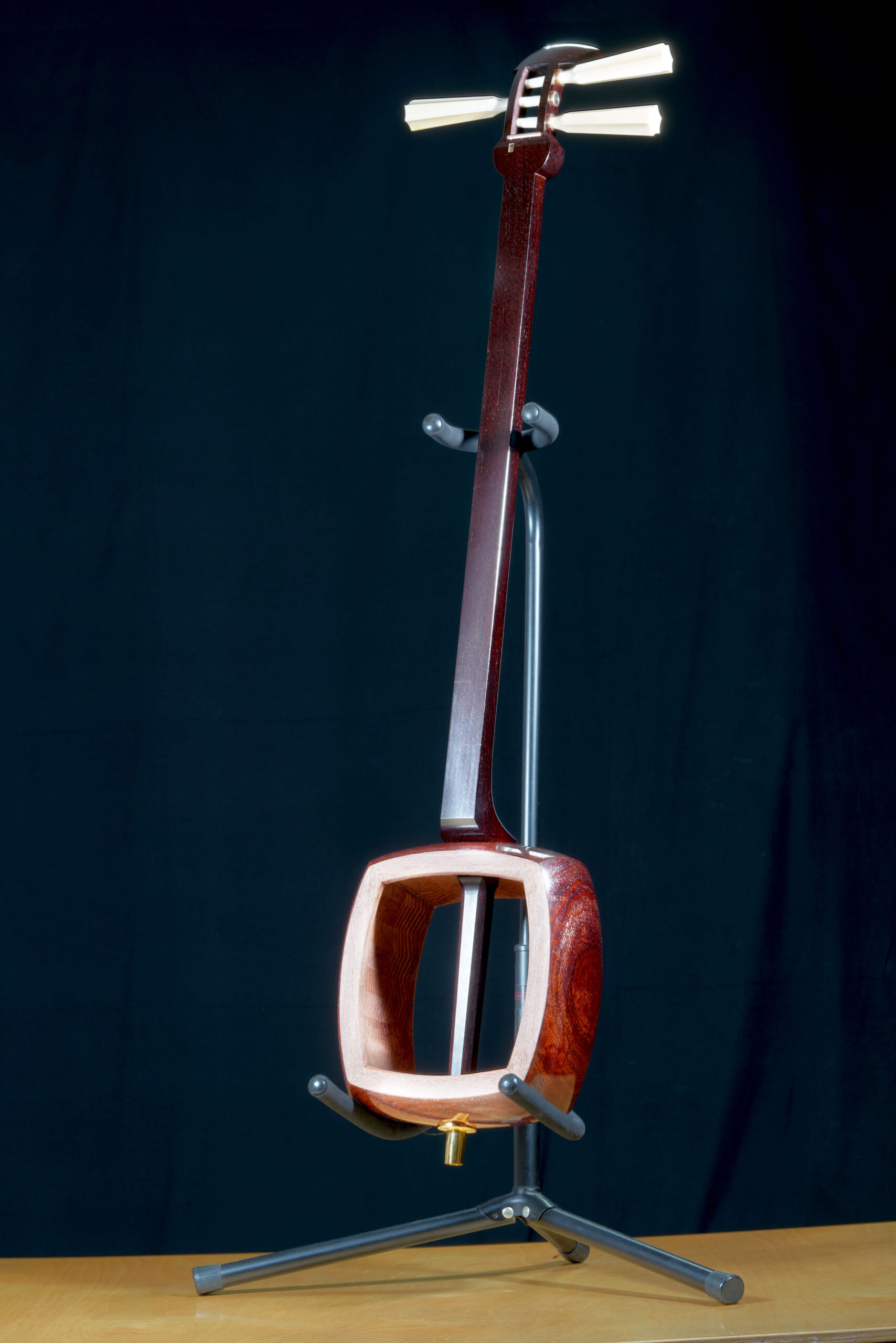
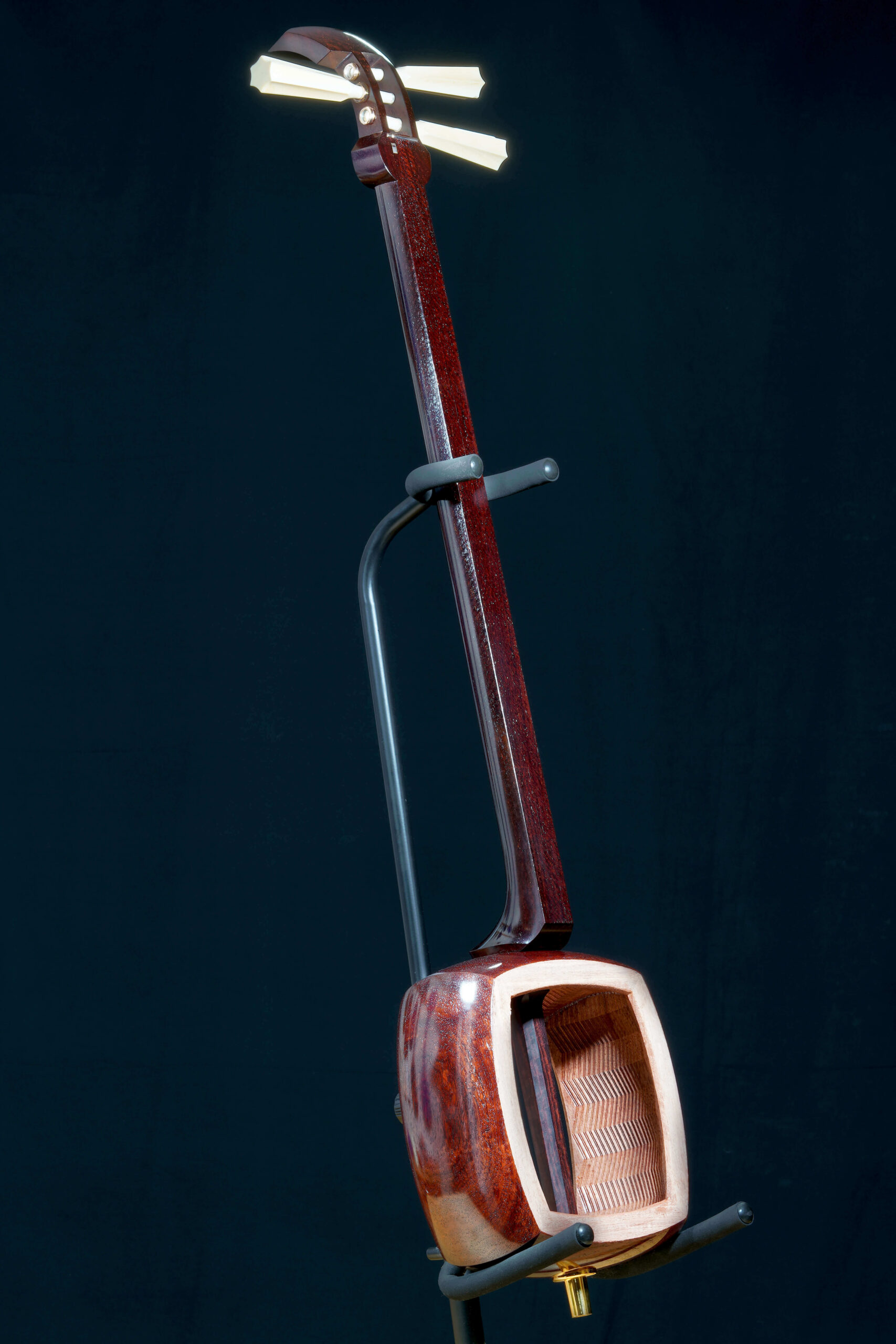
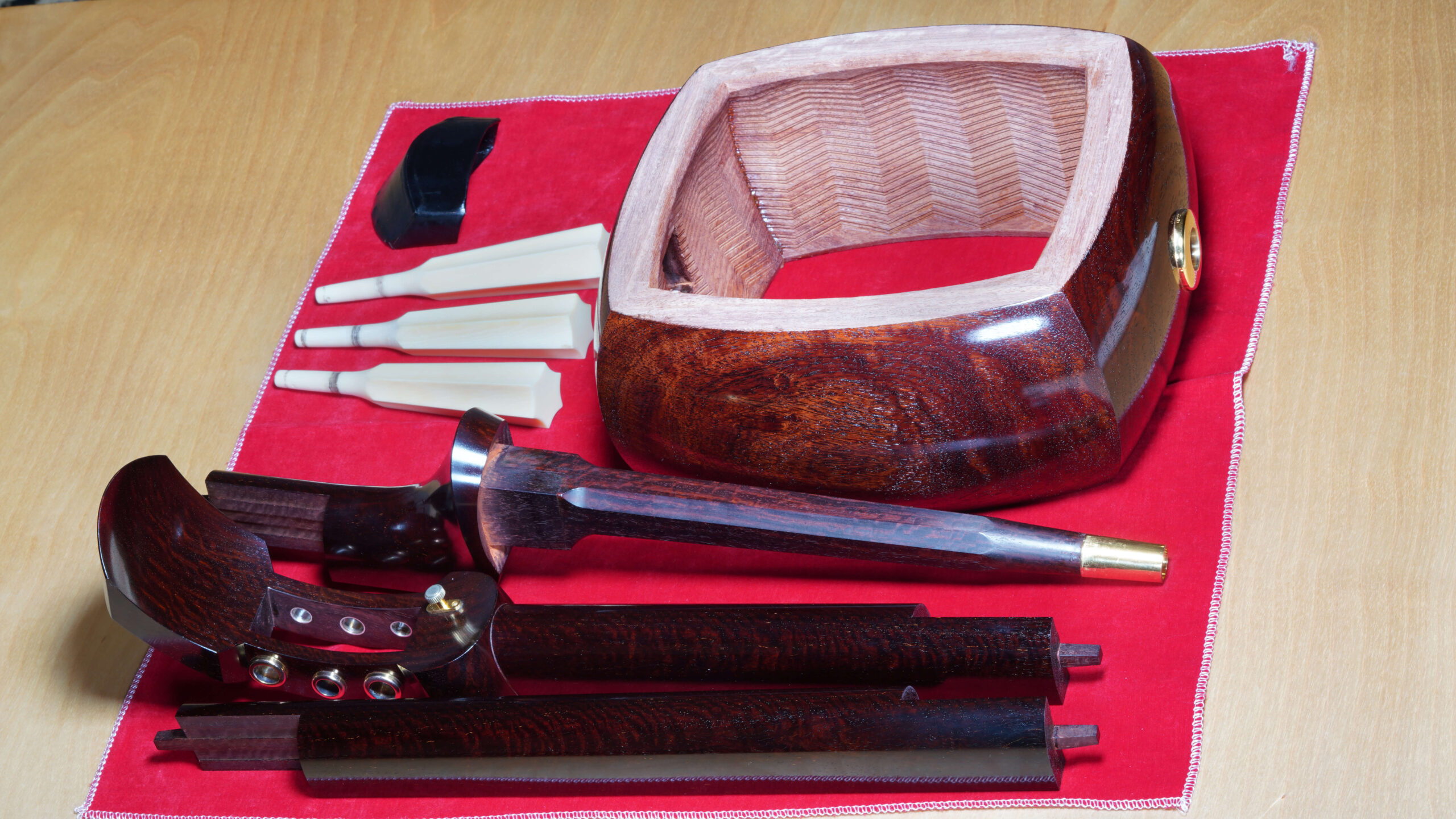
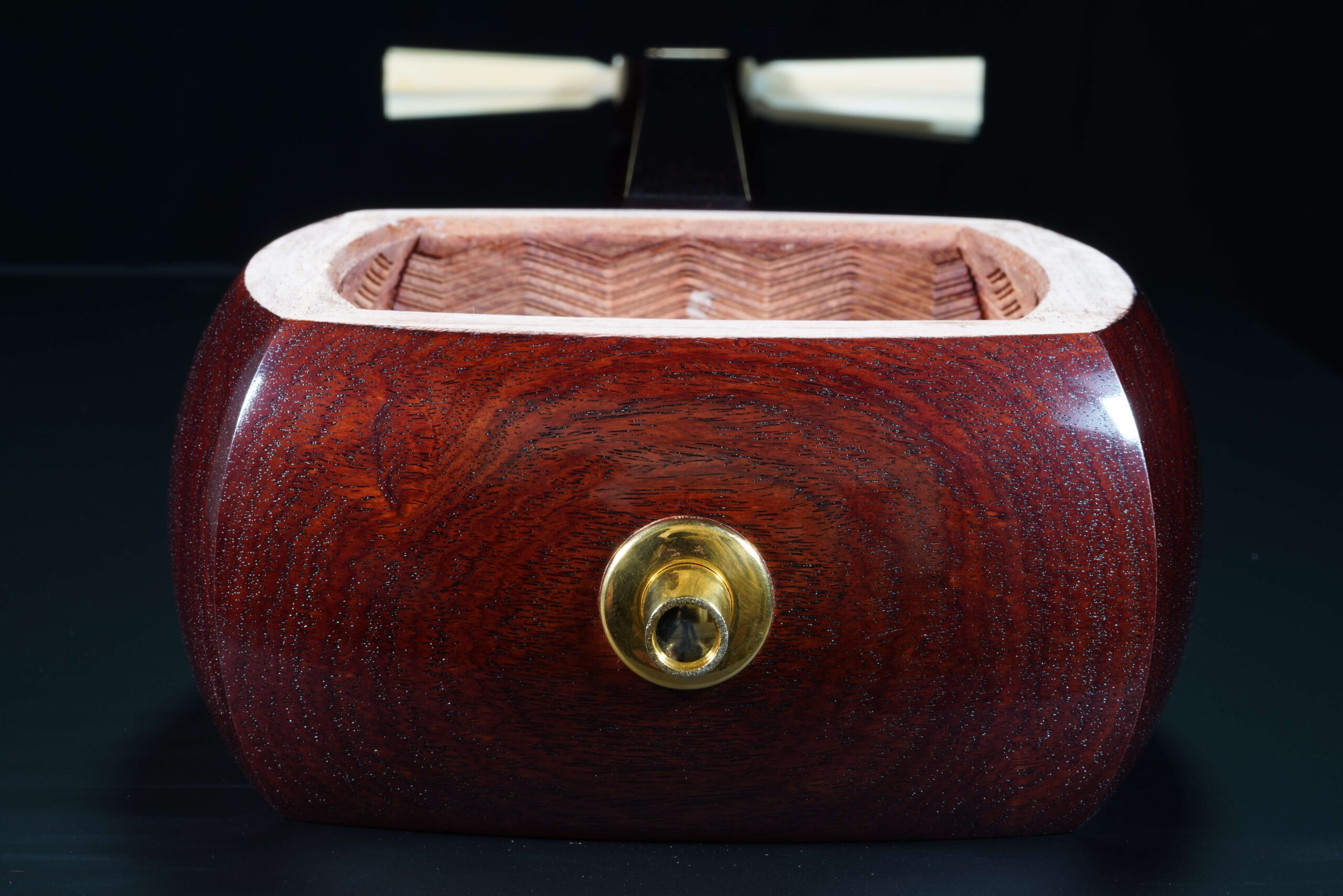
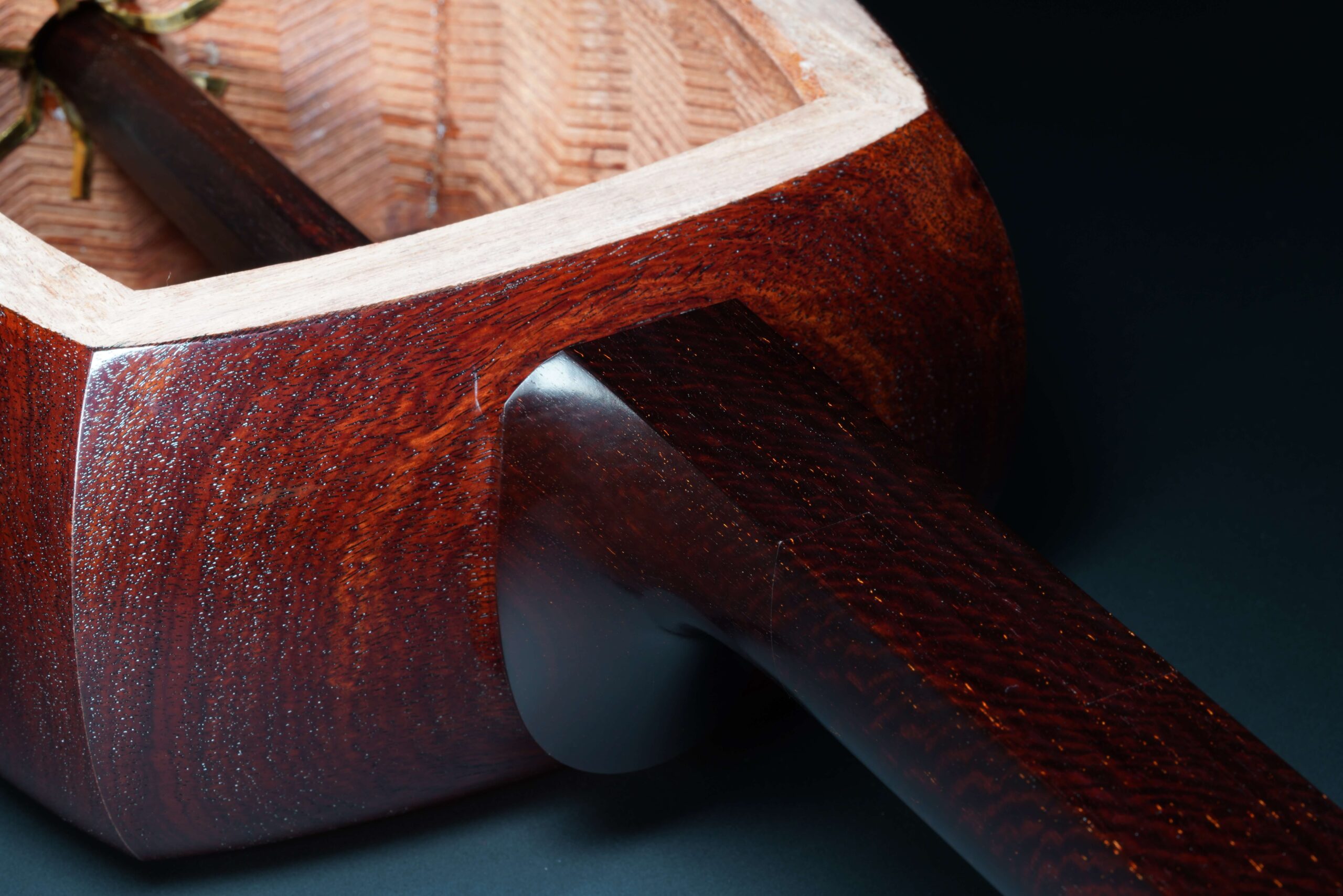
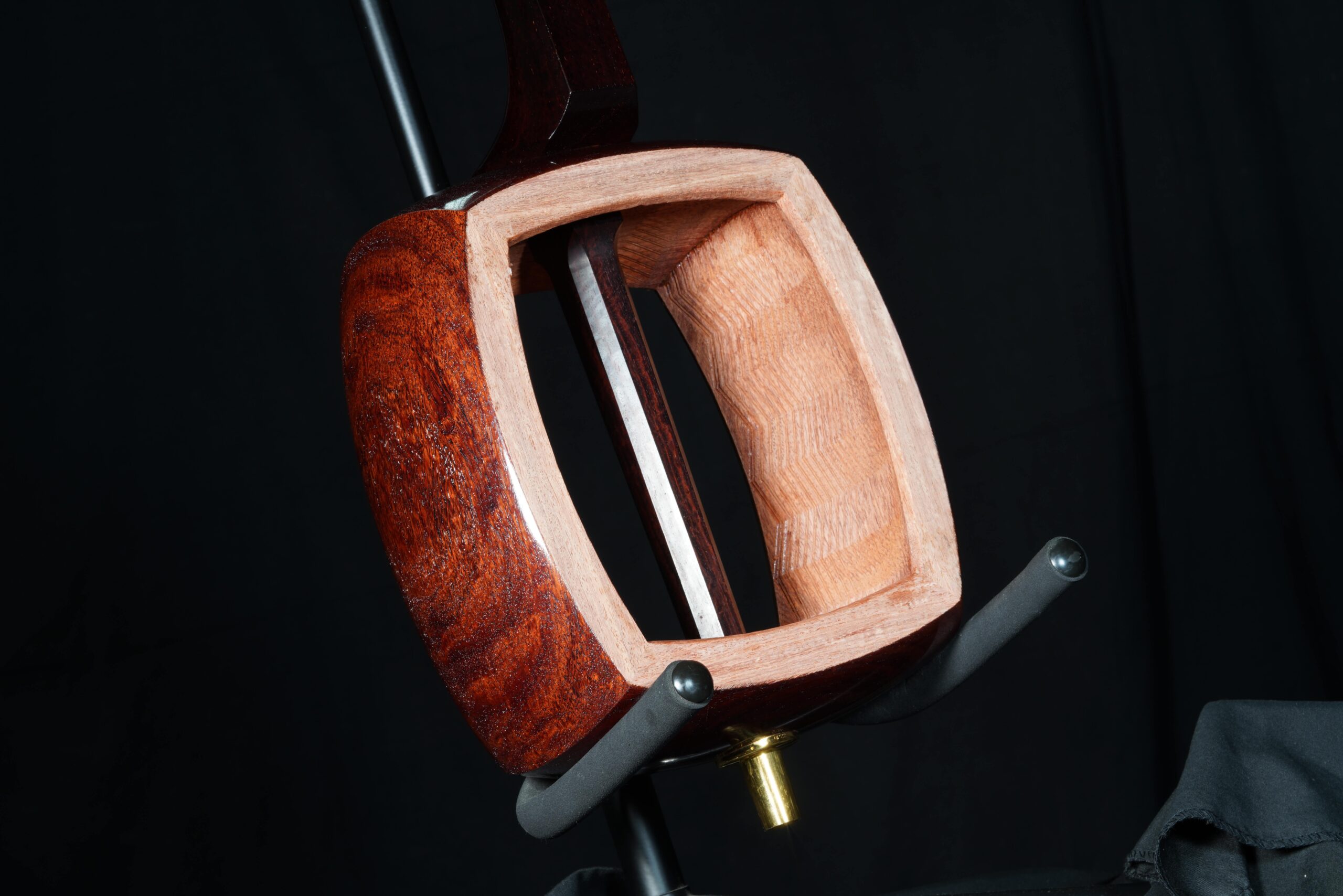
The Dou (Body): The high-quality Karin wood dou features komochi ayasugi (fine carved herring bone pattern) inside. The body was completely dismantled, joints leveled and reglued, sanded, and finished with fresh Urushi lacquer.
-
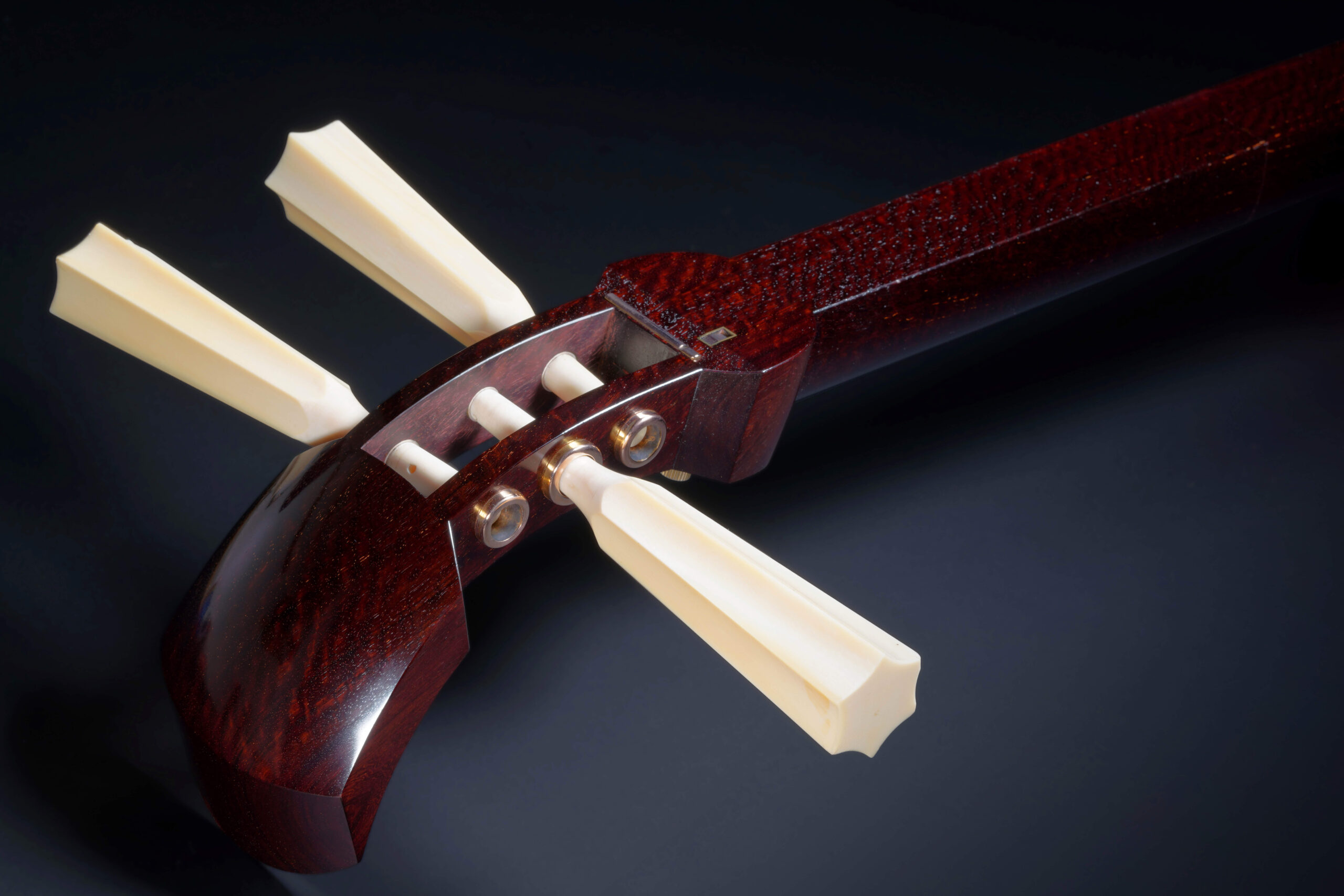
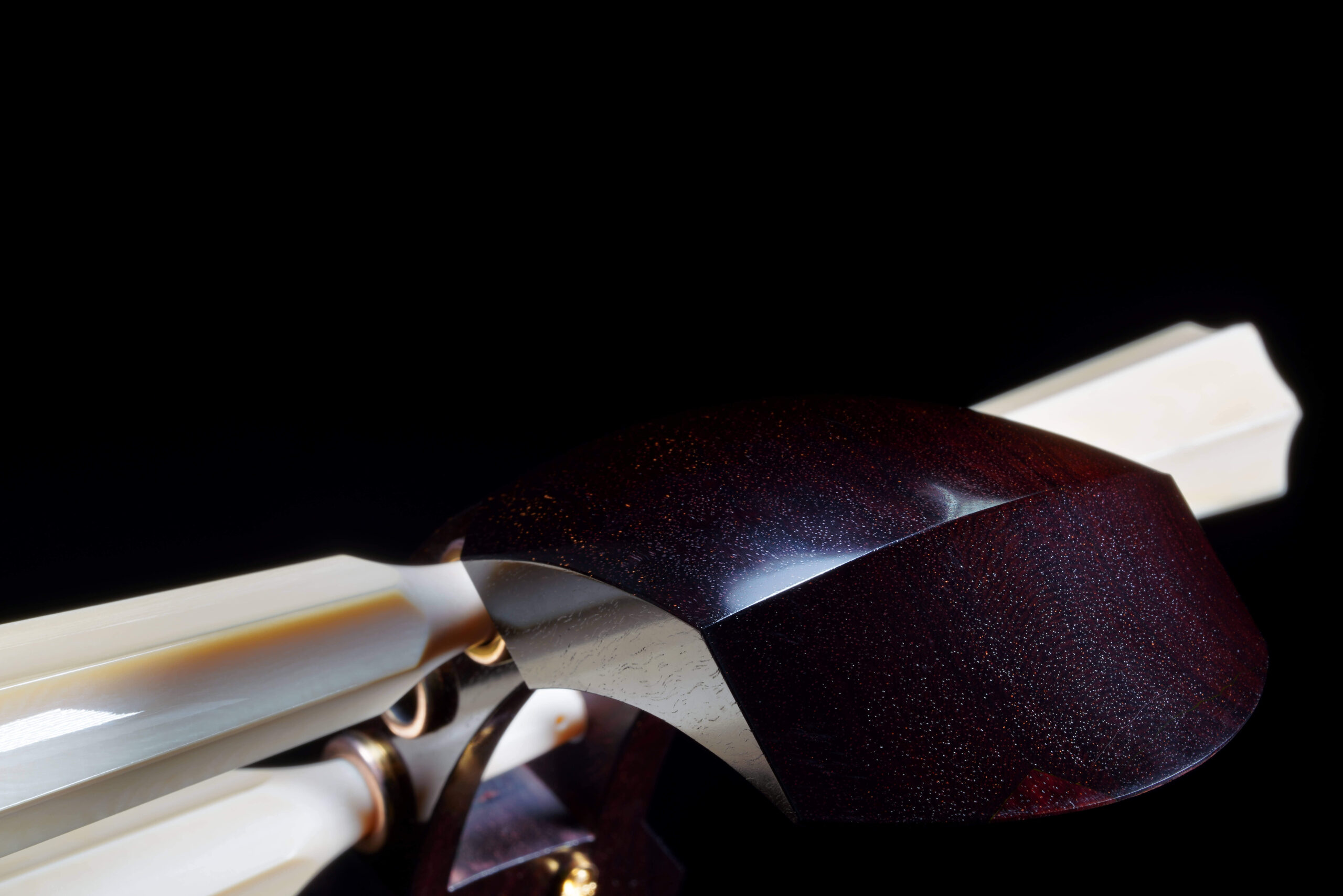
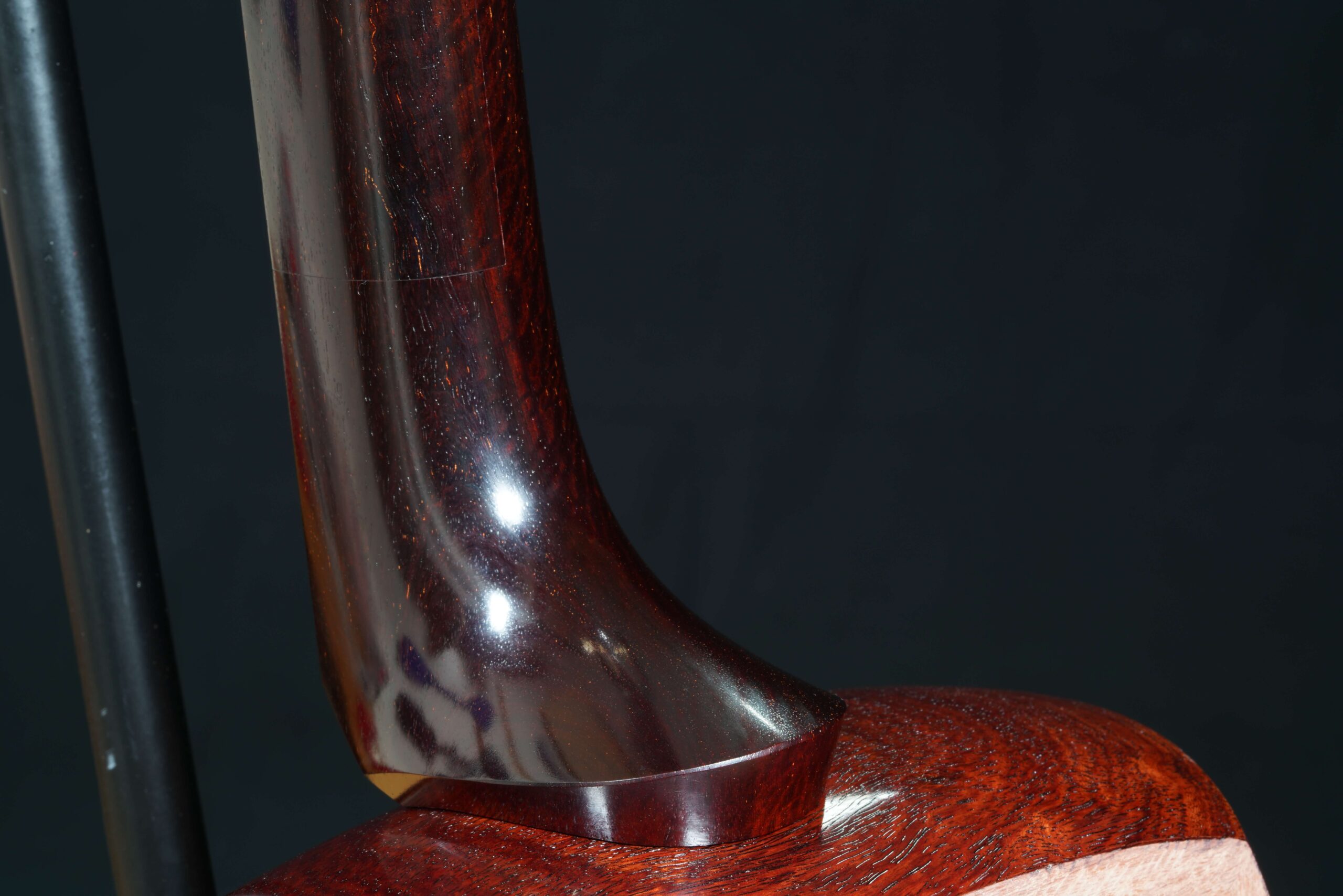
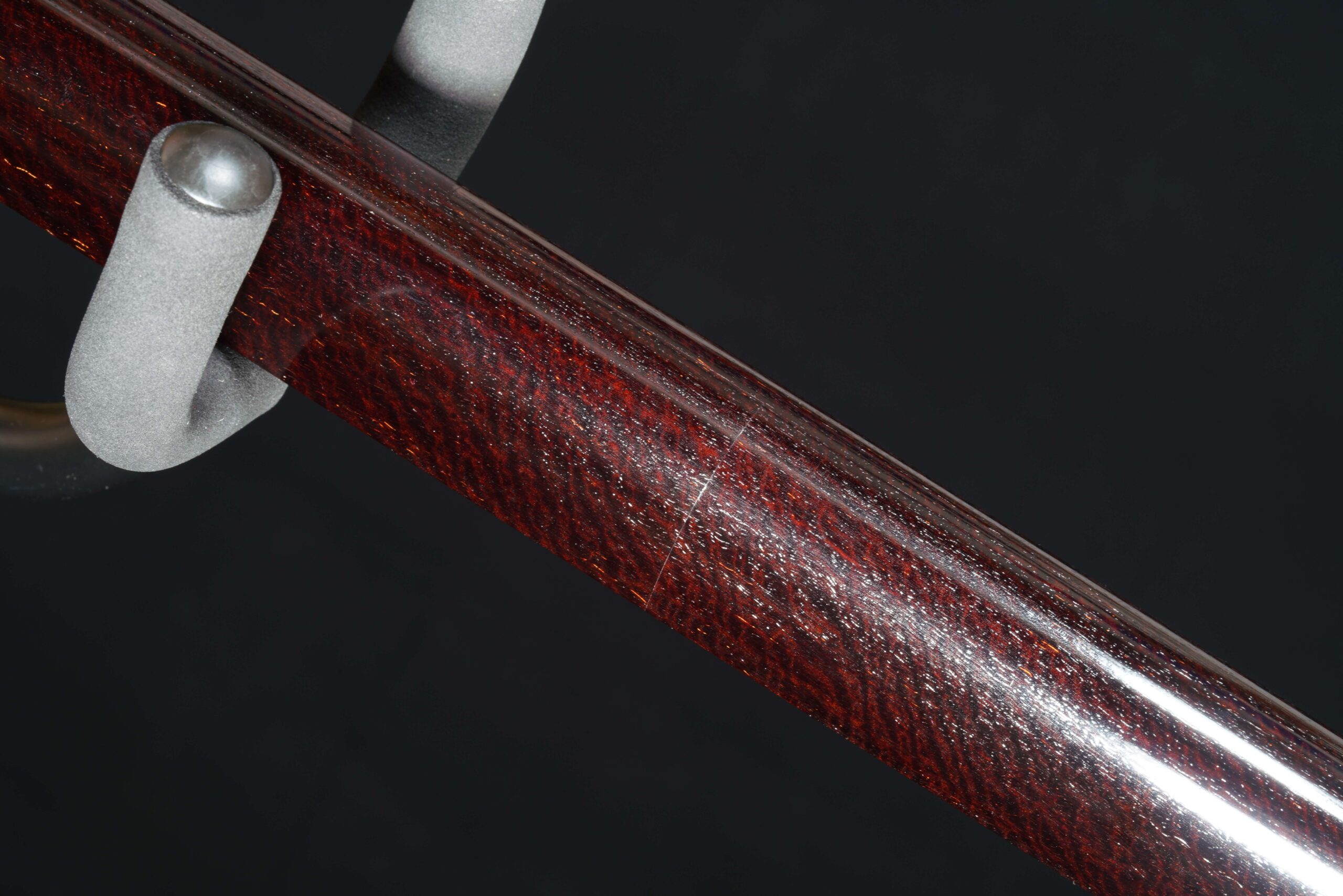
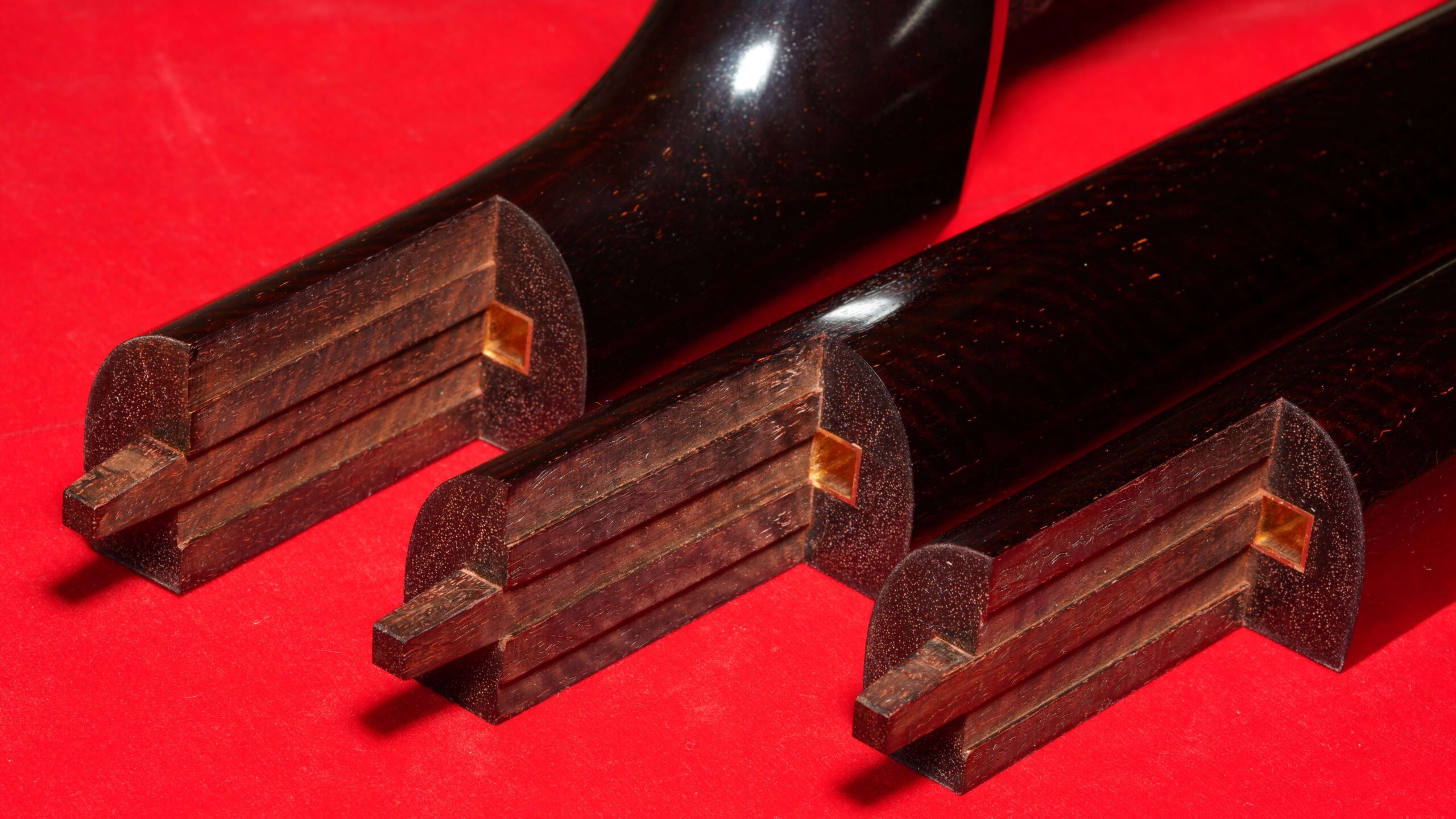
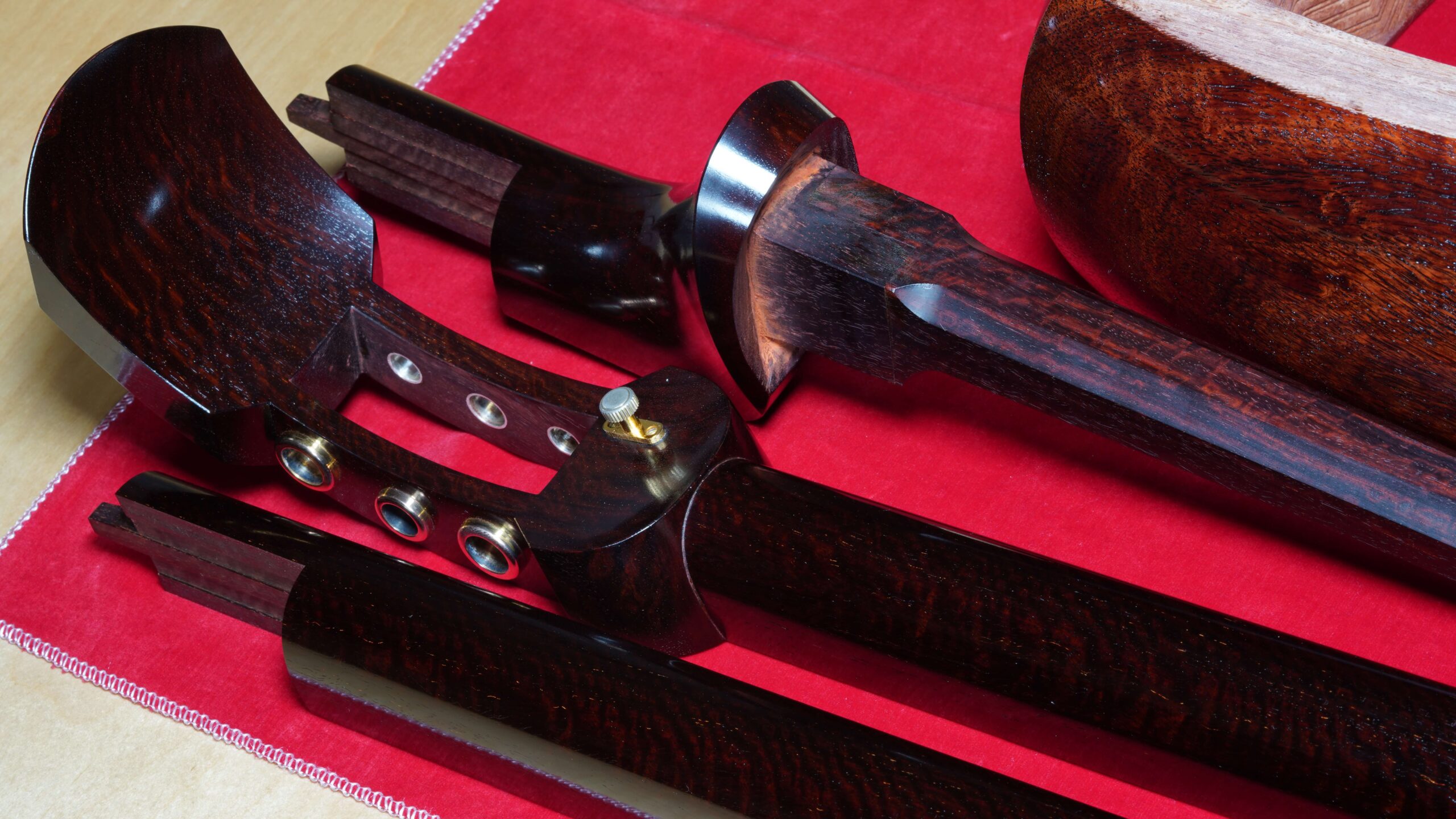
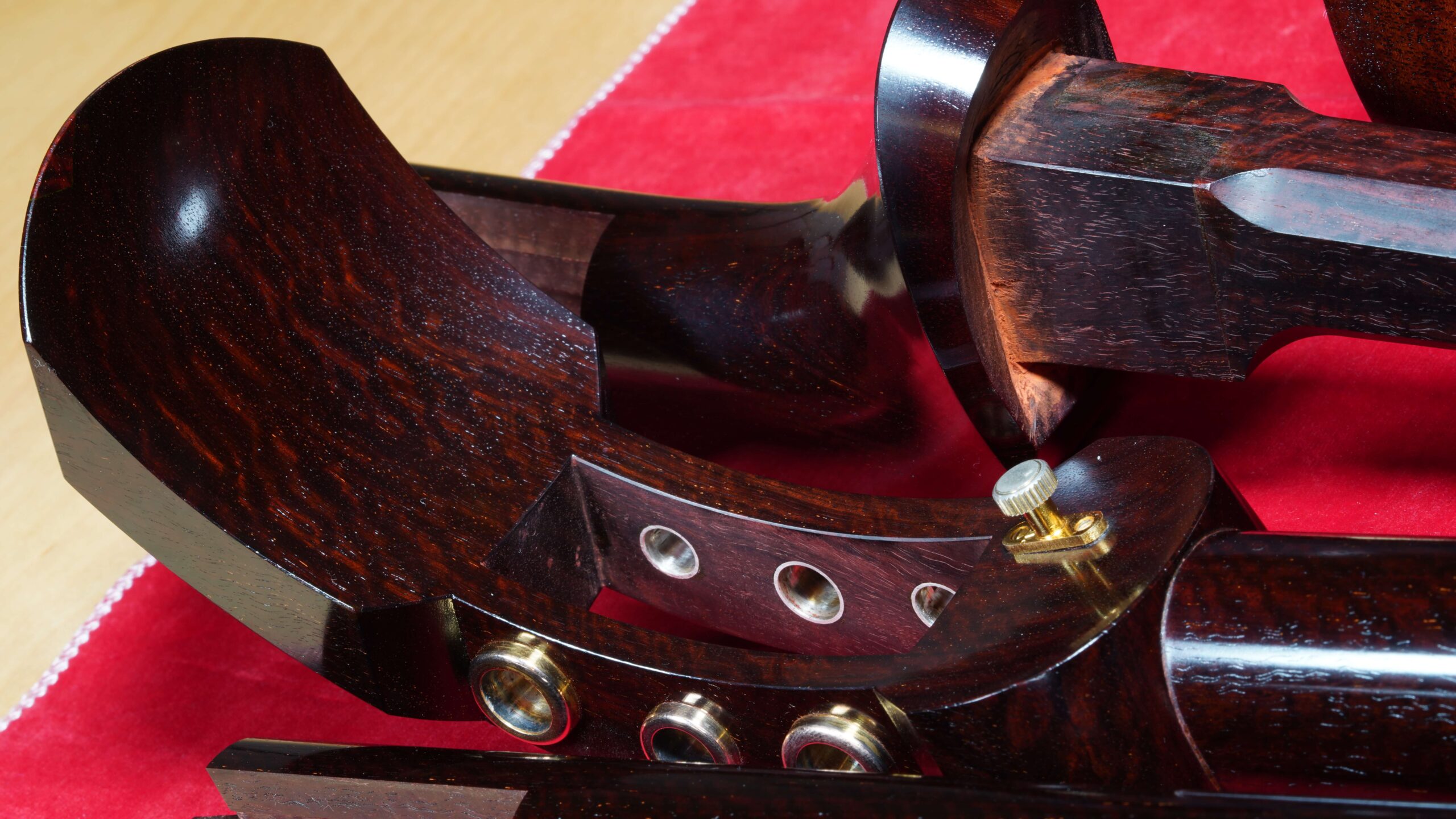
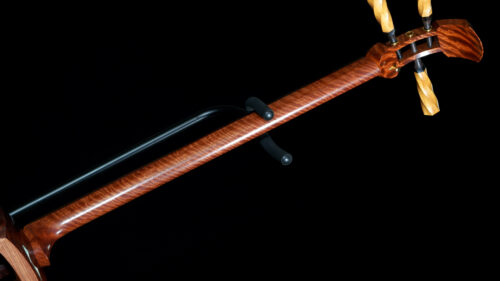
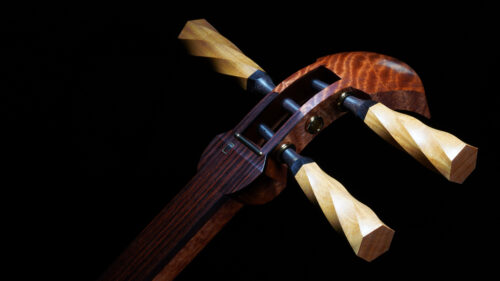
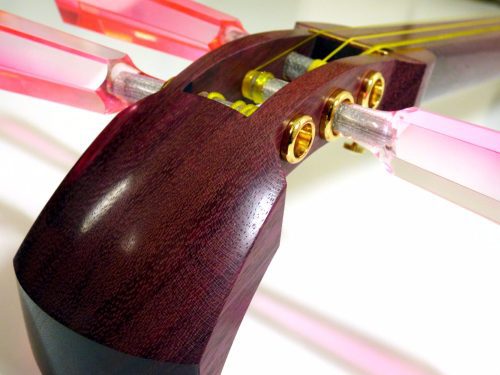
The Neck: Masterfully leveled and relacquered for a smooth, brand-new playing experience. Note: A tiny repair was made to the tip of the tenjin using new Kouki; it is expertly fitted and will darken to match the rest of the wood within a year or two.
-
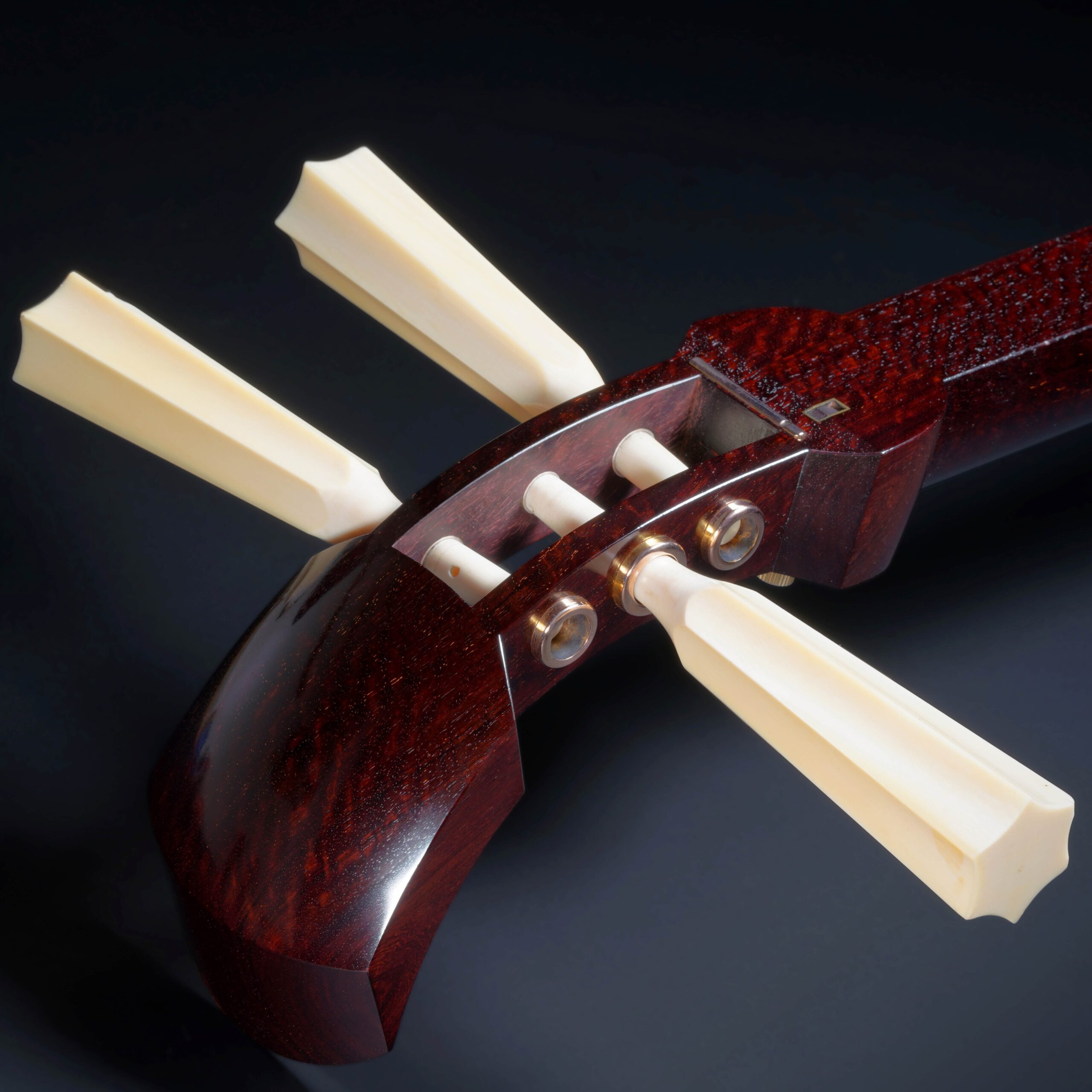
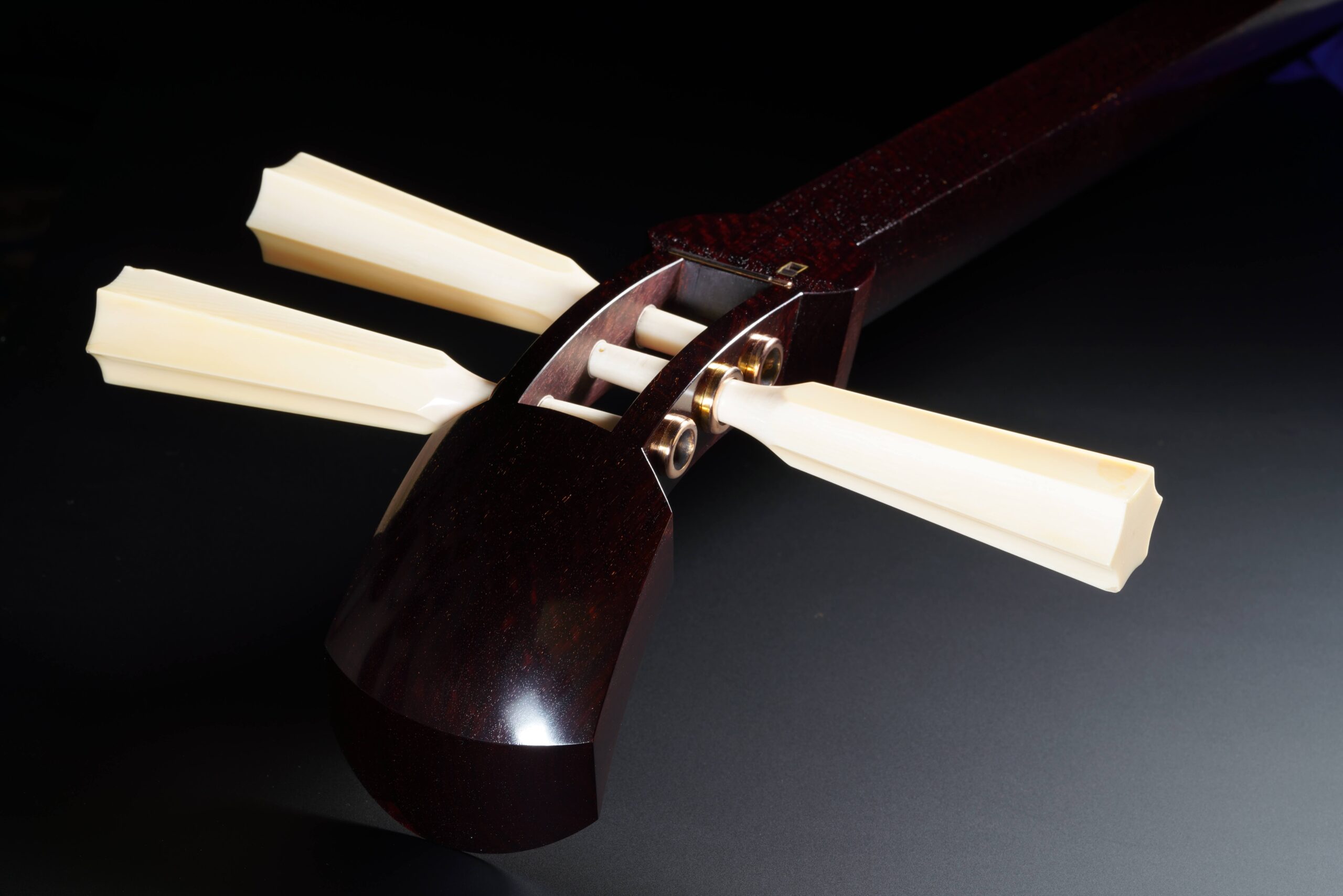
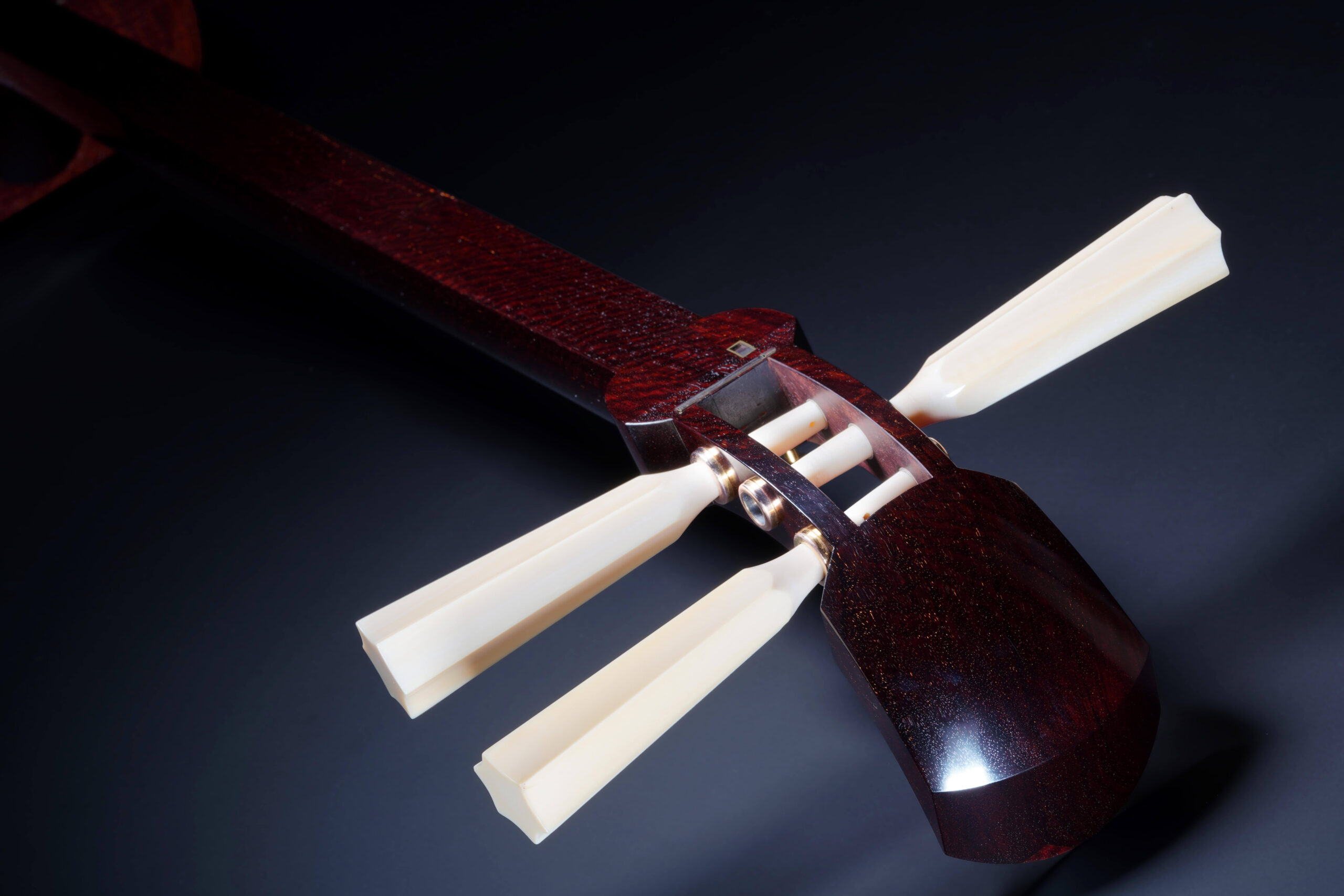
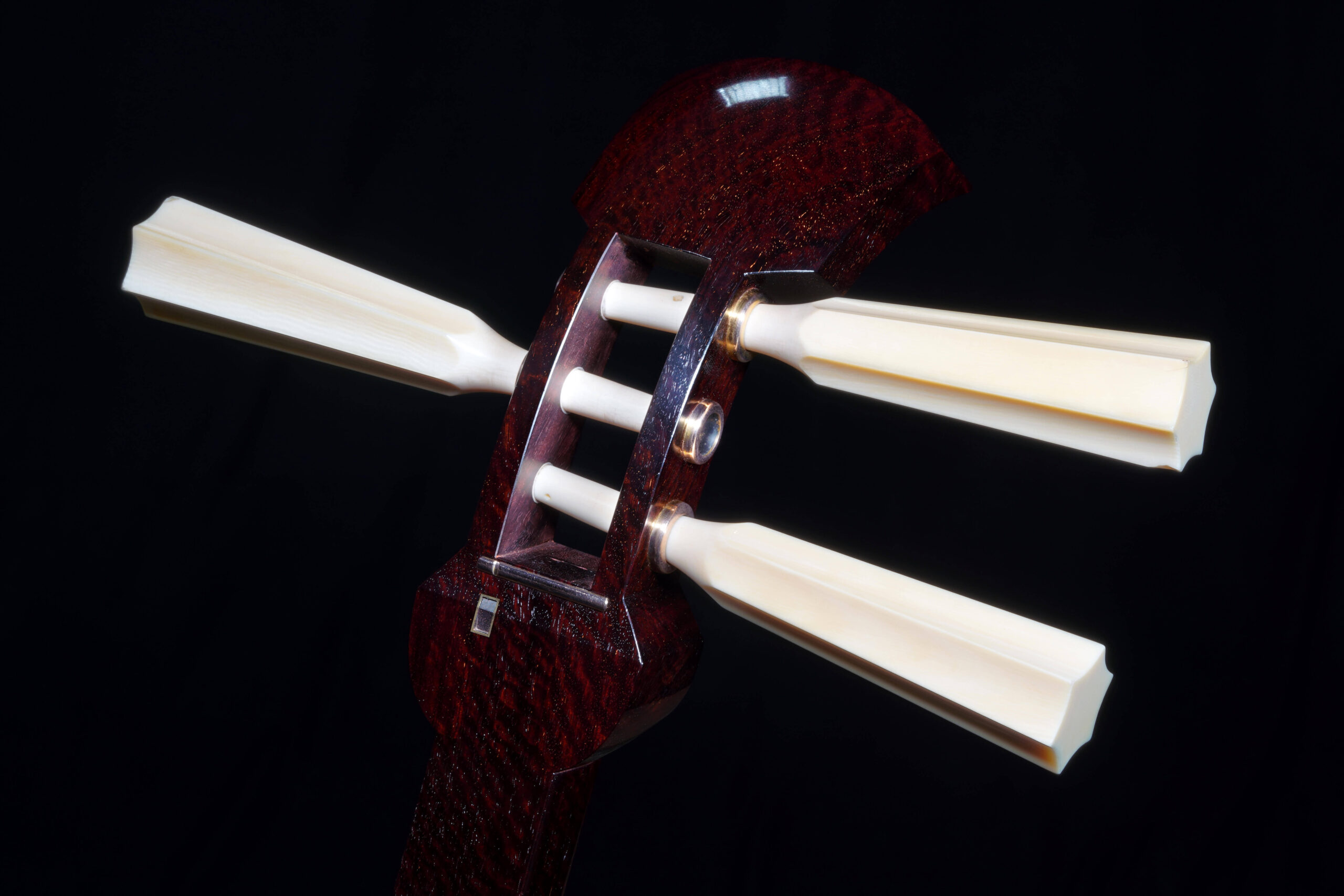
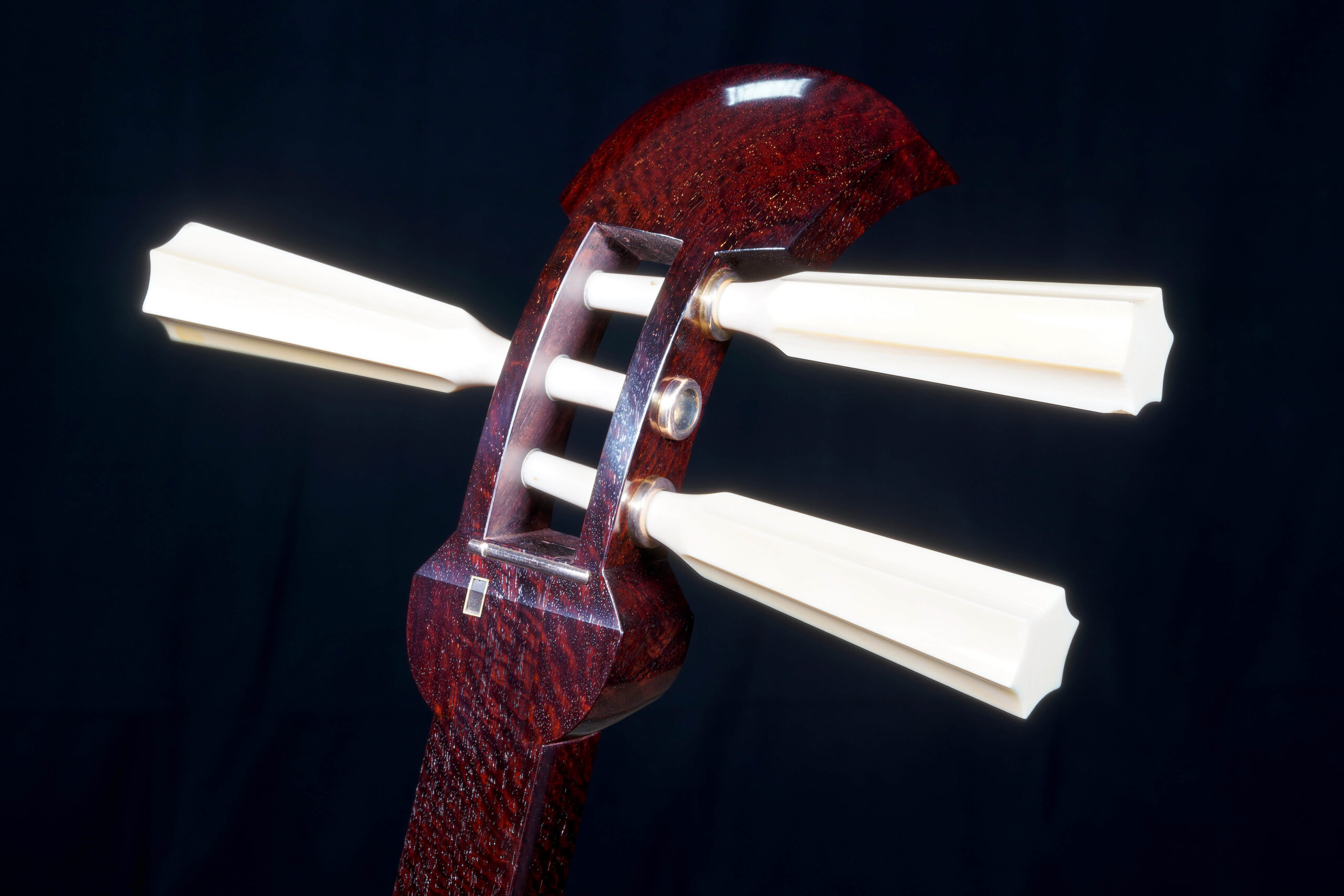
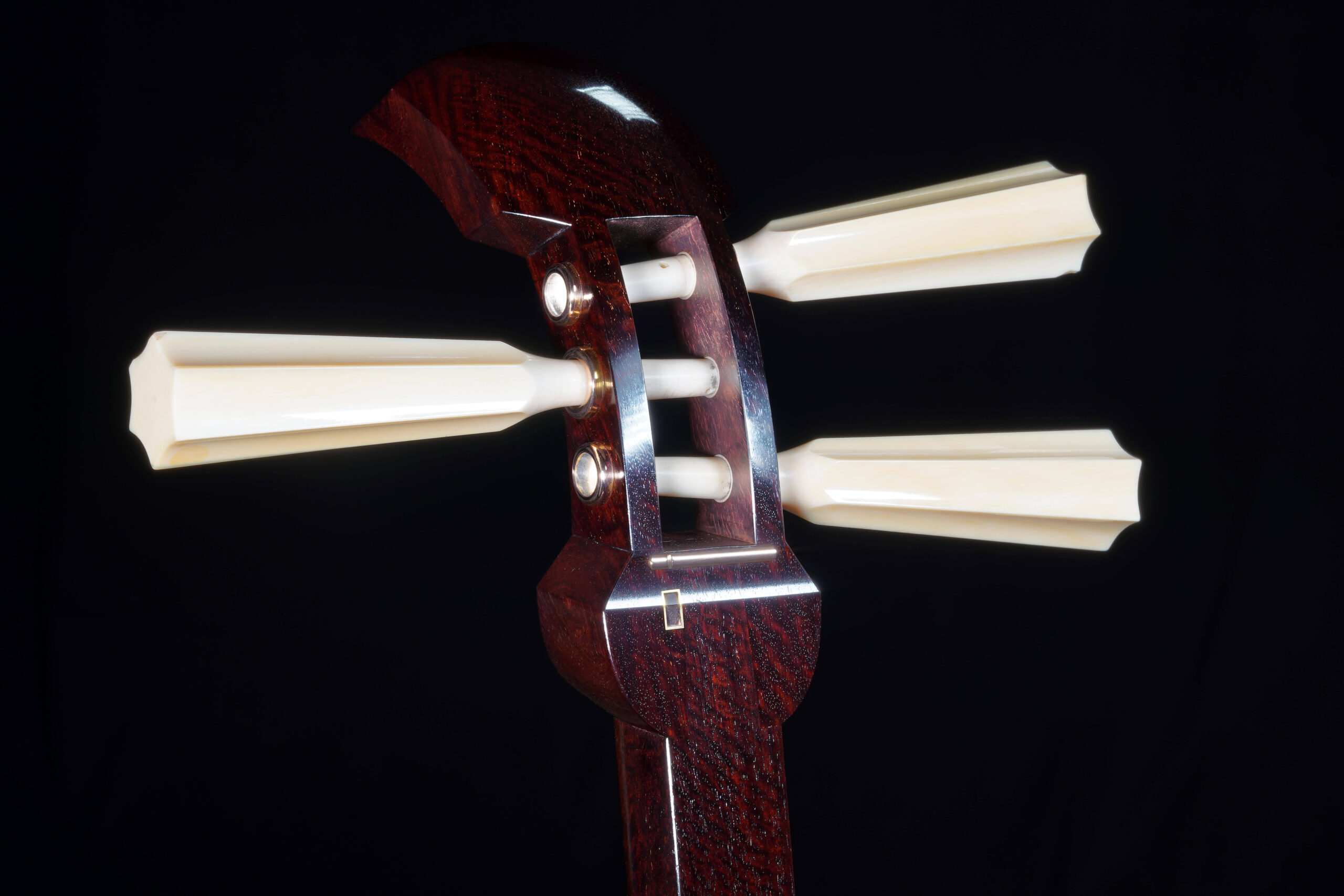
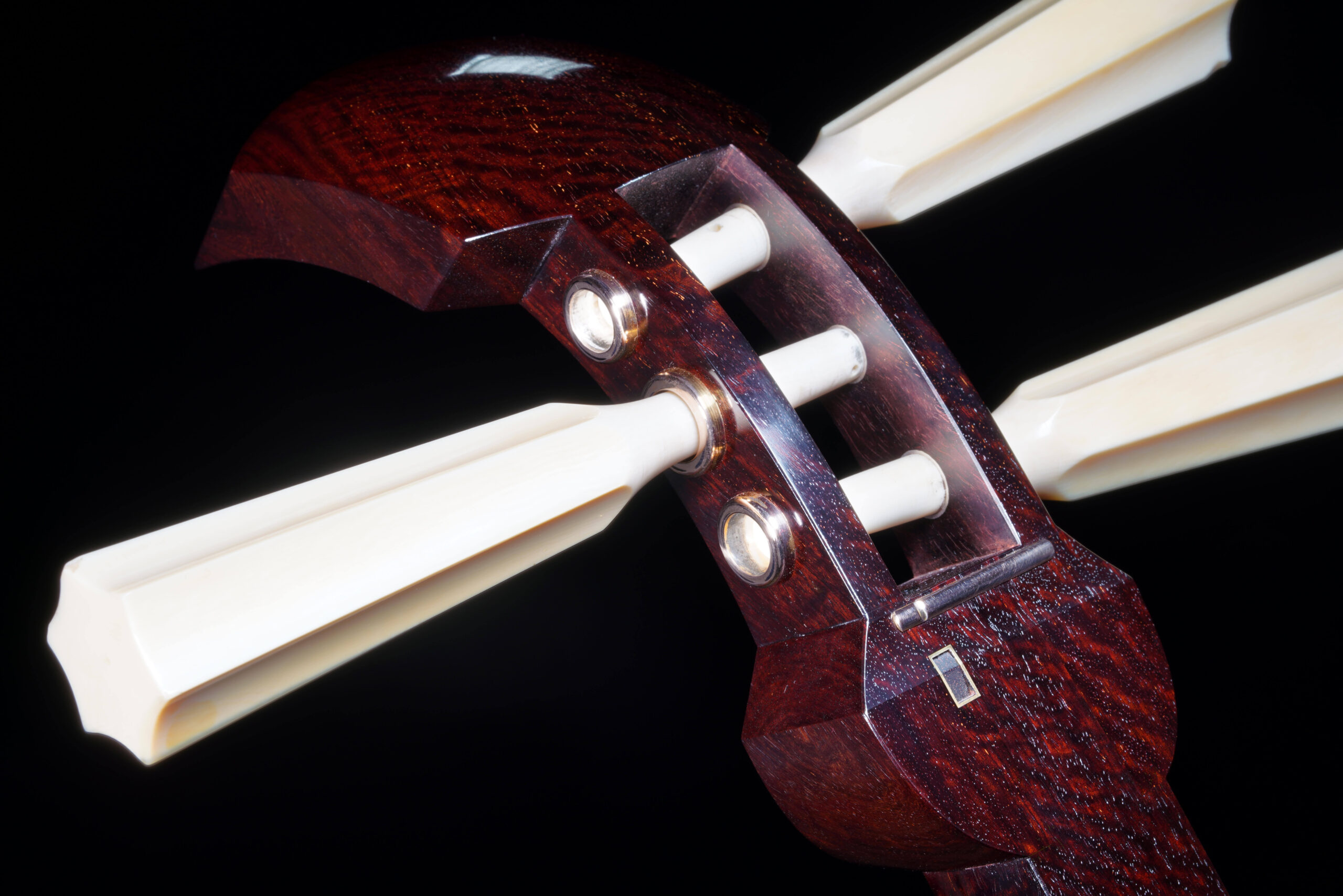
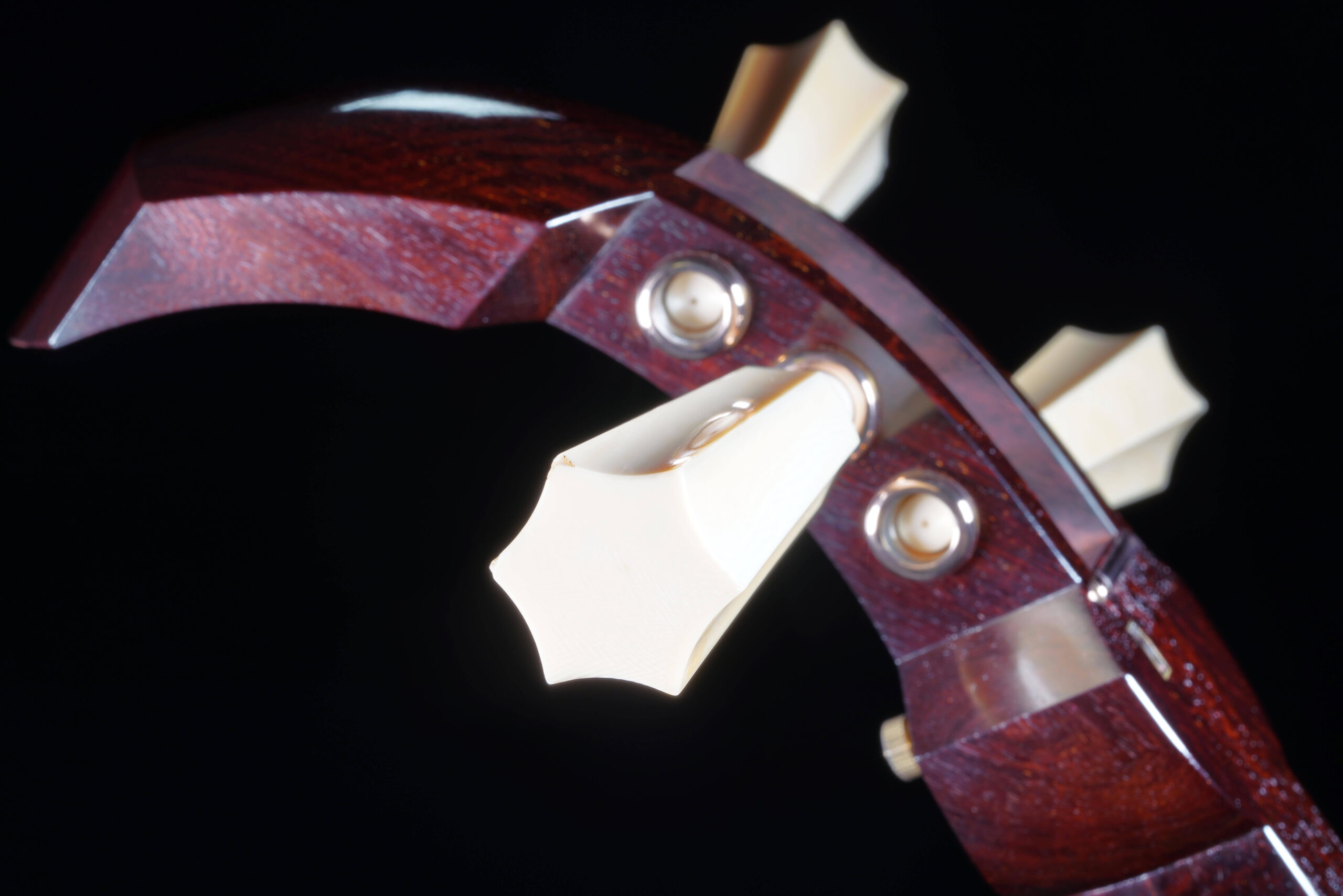
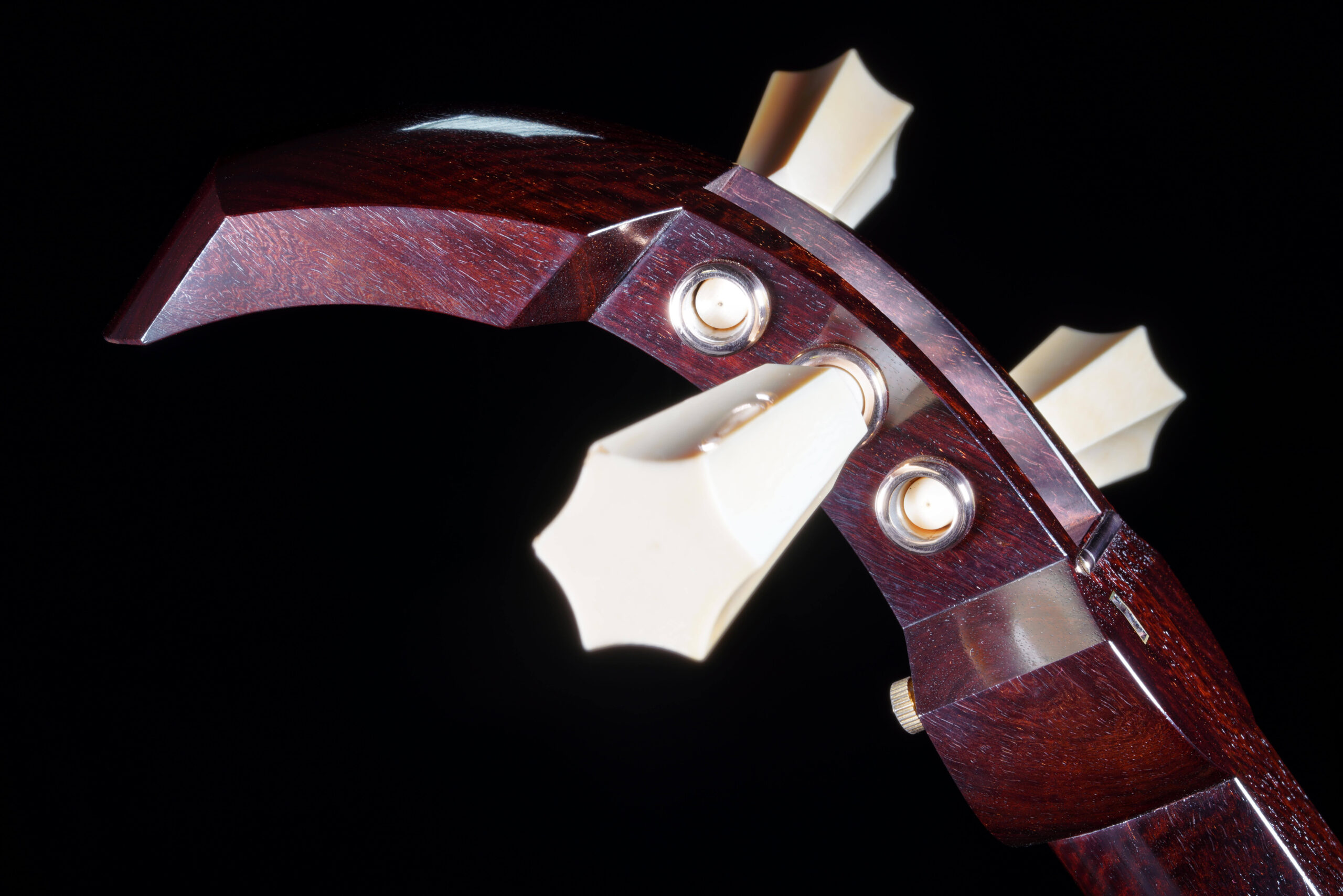
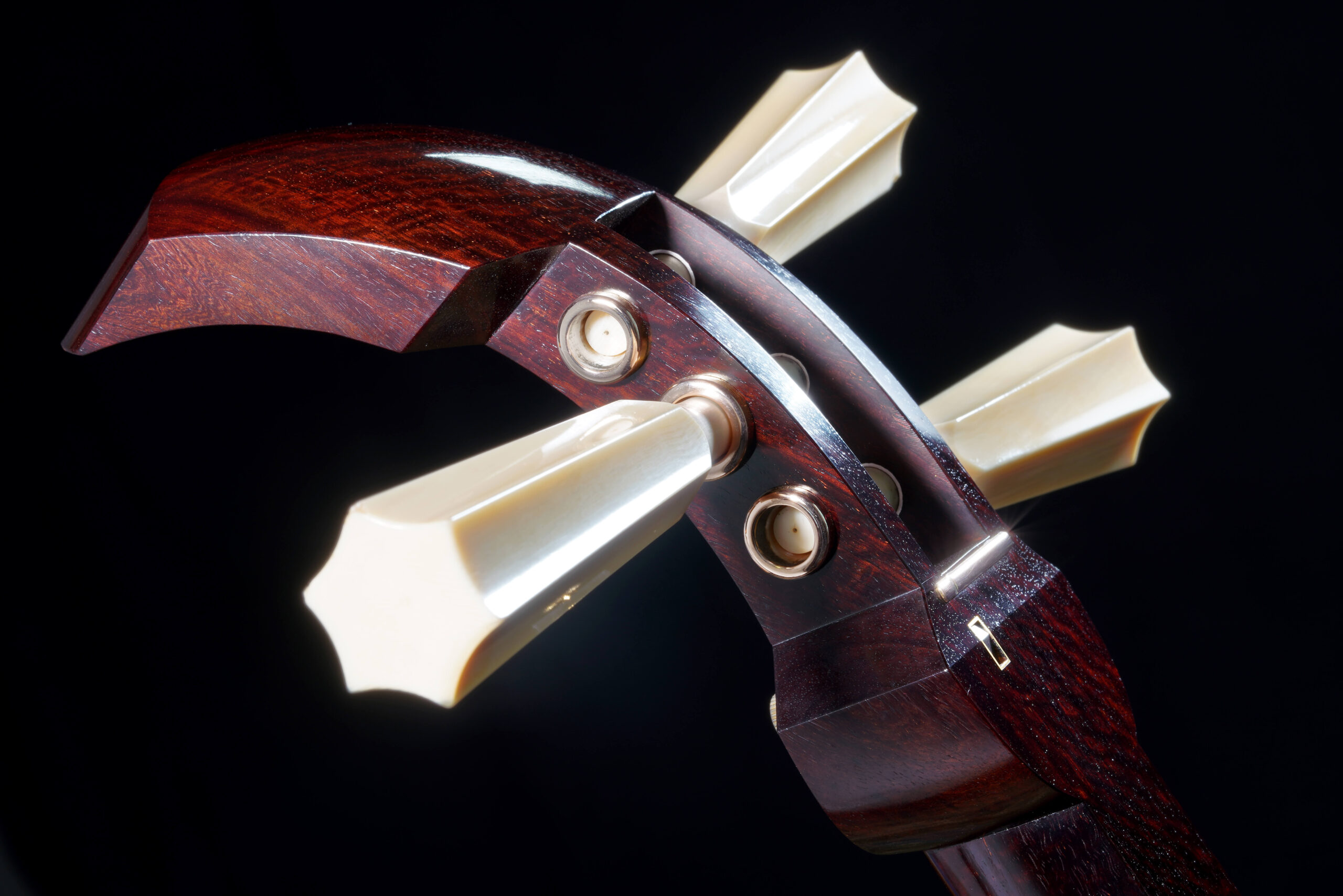
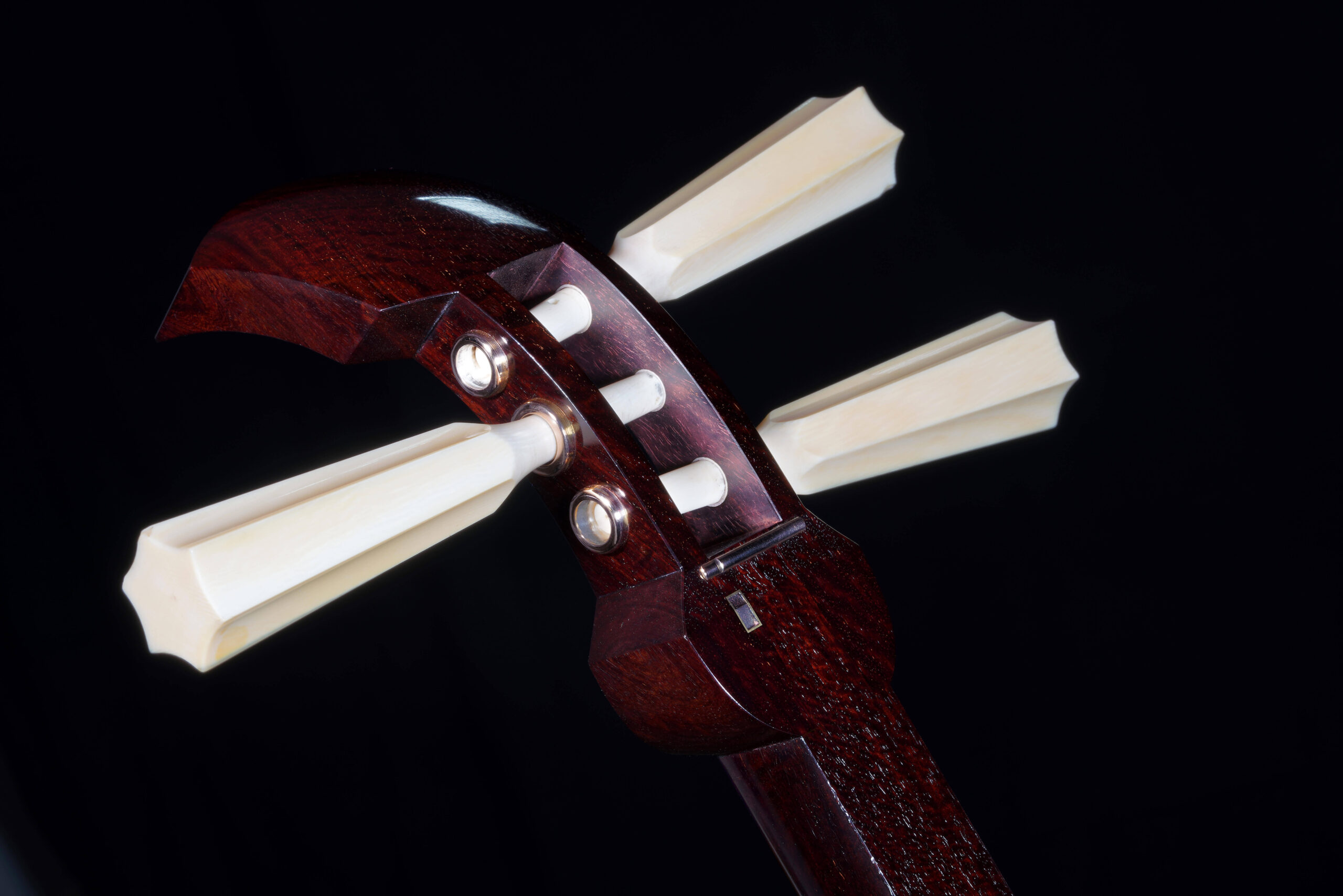
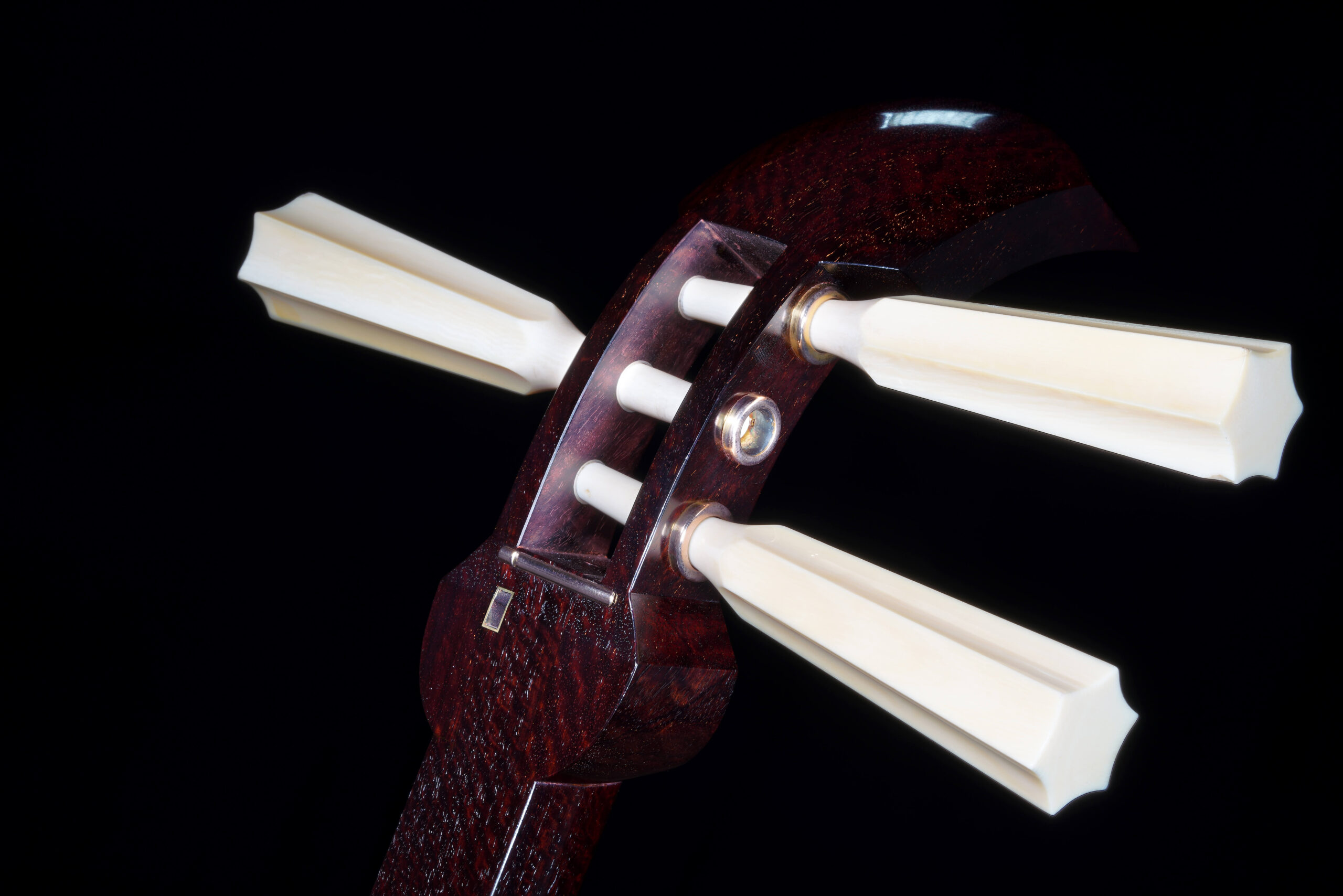
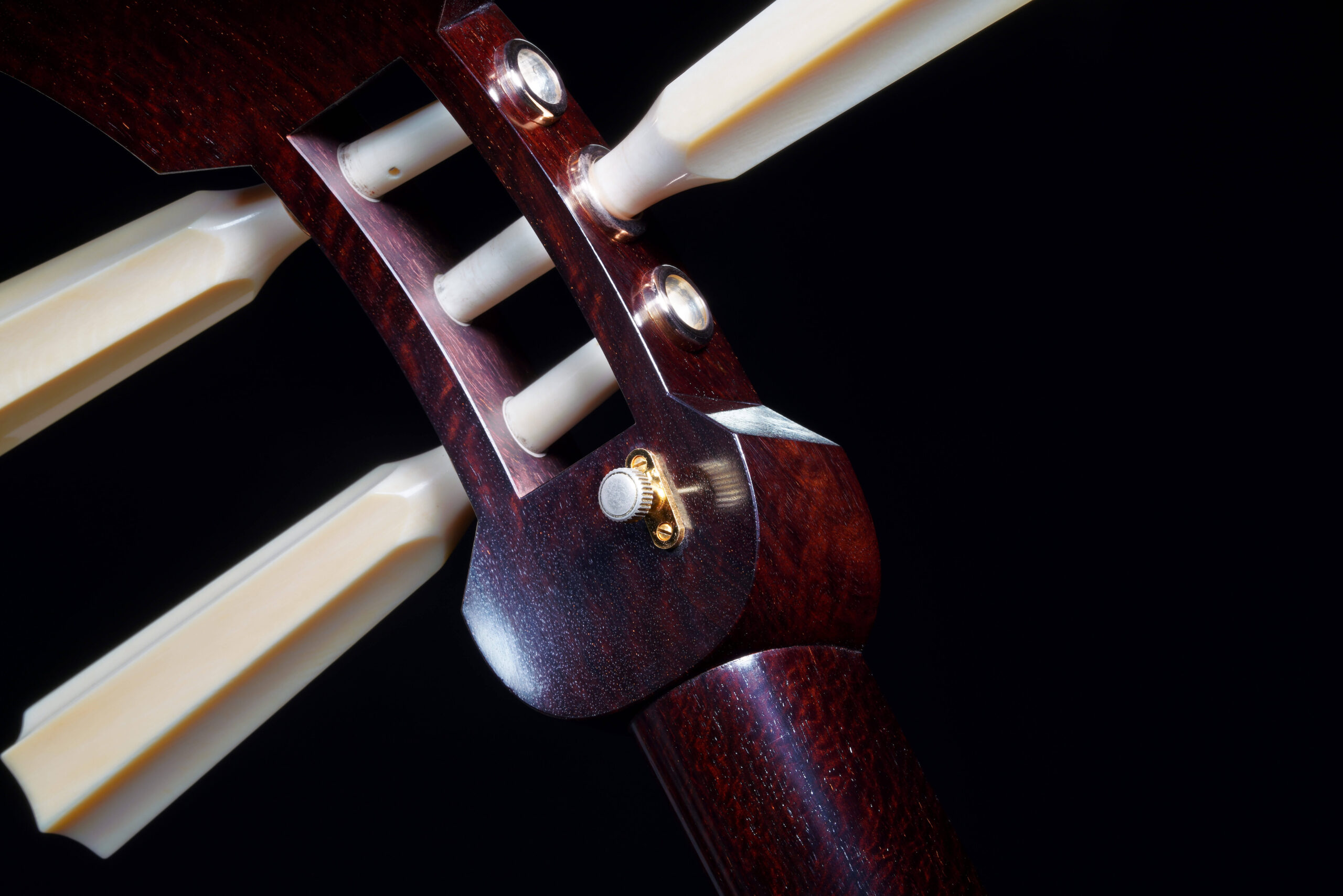
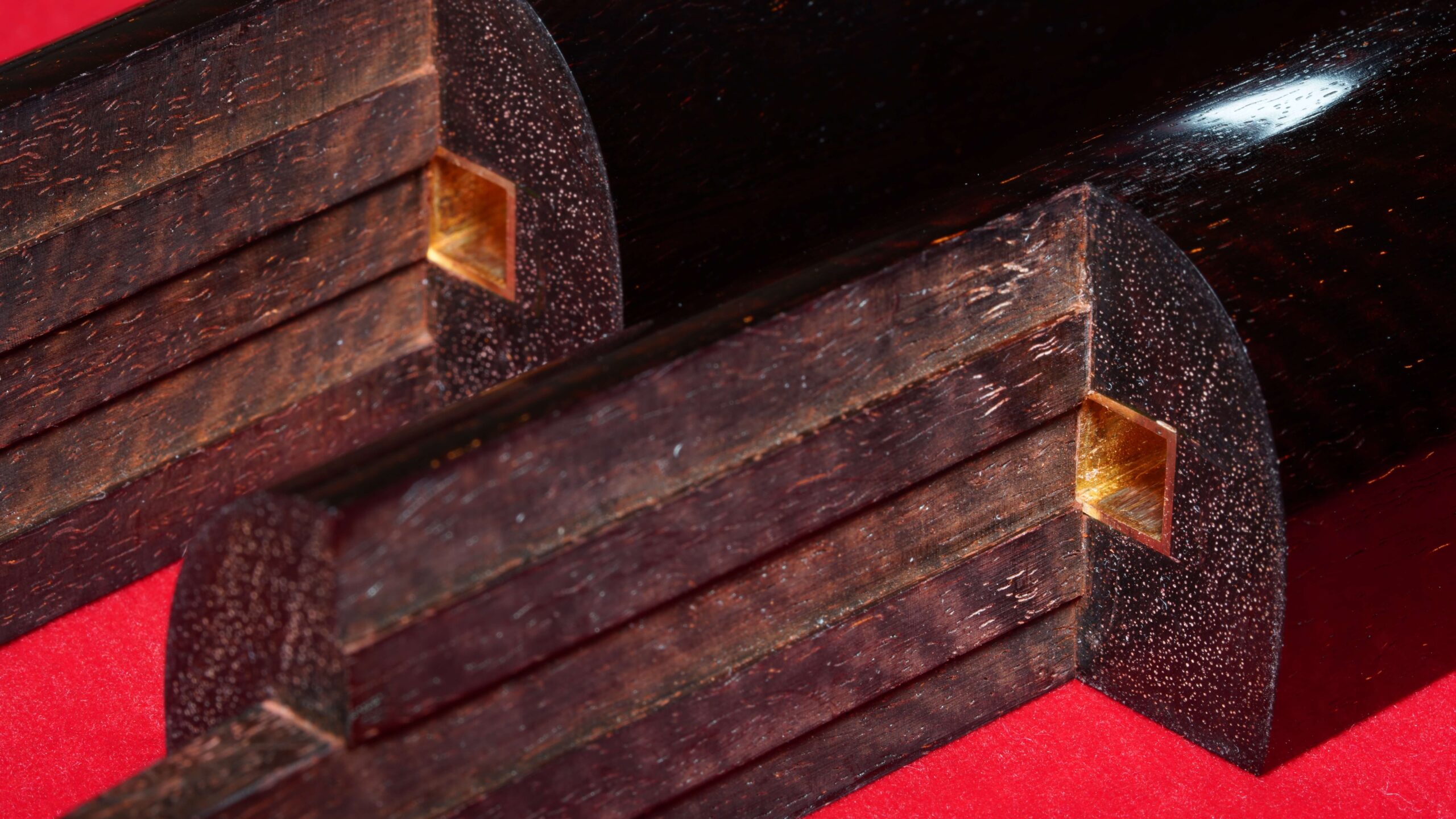
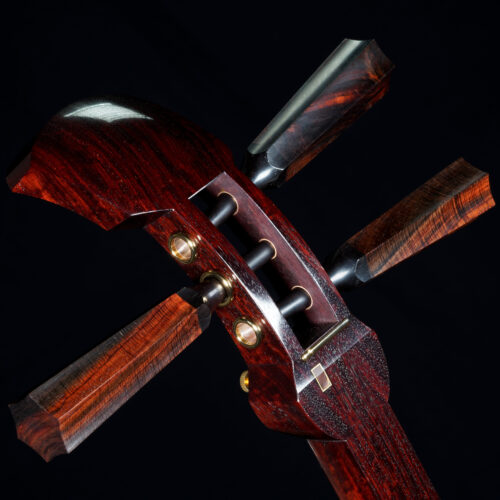
The Hardware: As well as the standard rindo, zagane, and azuma sawari, this shamisen also features kinbozo (gold-plated fittings) in the joints, traditionally reserved for only the highest-tier instruments.
First taste of Hibiki Sonic Skin
Be among the first in the world to experience Hibiki Sonic! This is a monumental update for both Hibiki and synthetic shamisen skin technology—offering a resonance and surface texture much closer to natural skin than ever before. It is not yet available to the general public, but comes standard with this instrument in your choice of Black or White.
A Note on Authenticity & Playability
-
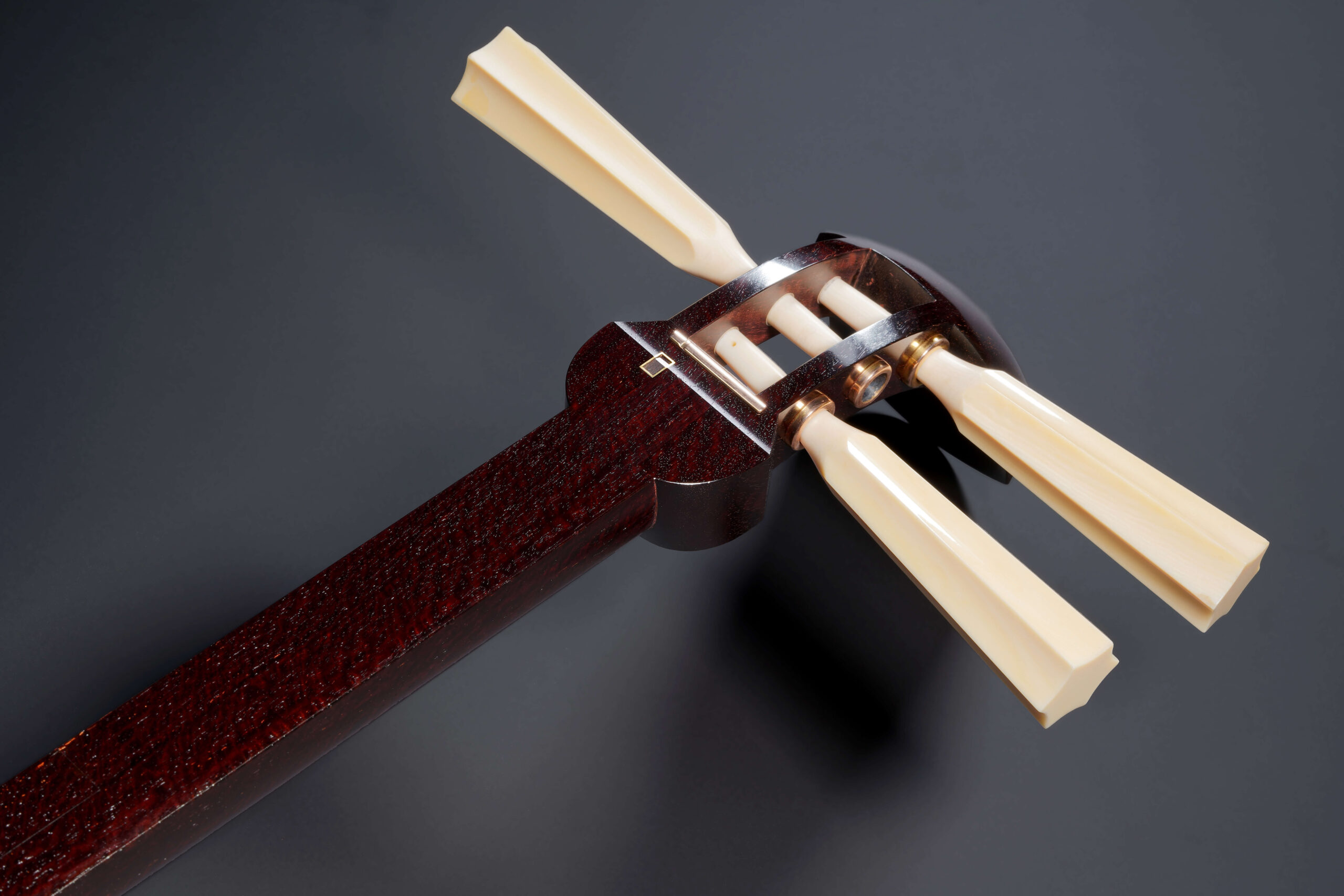
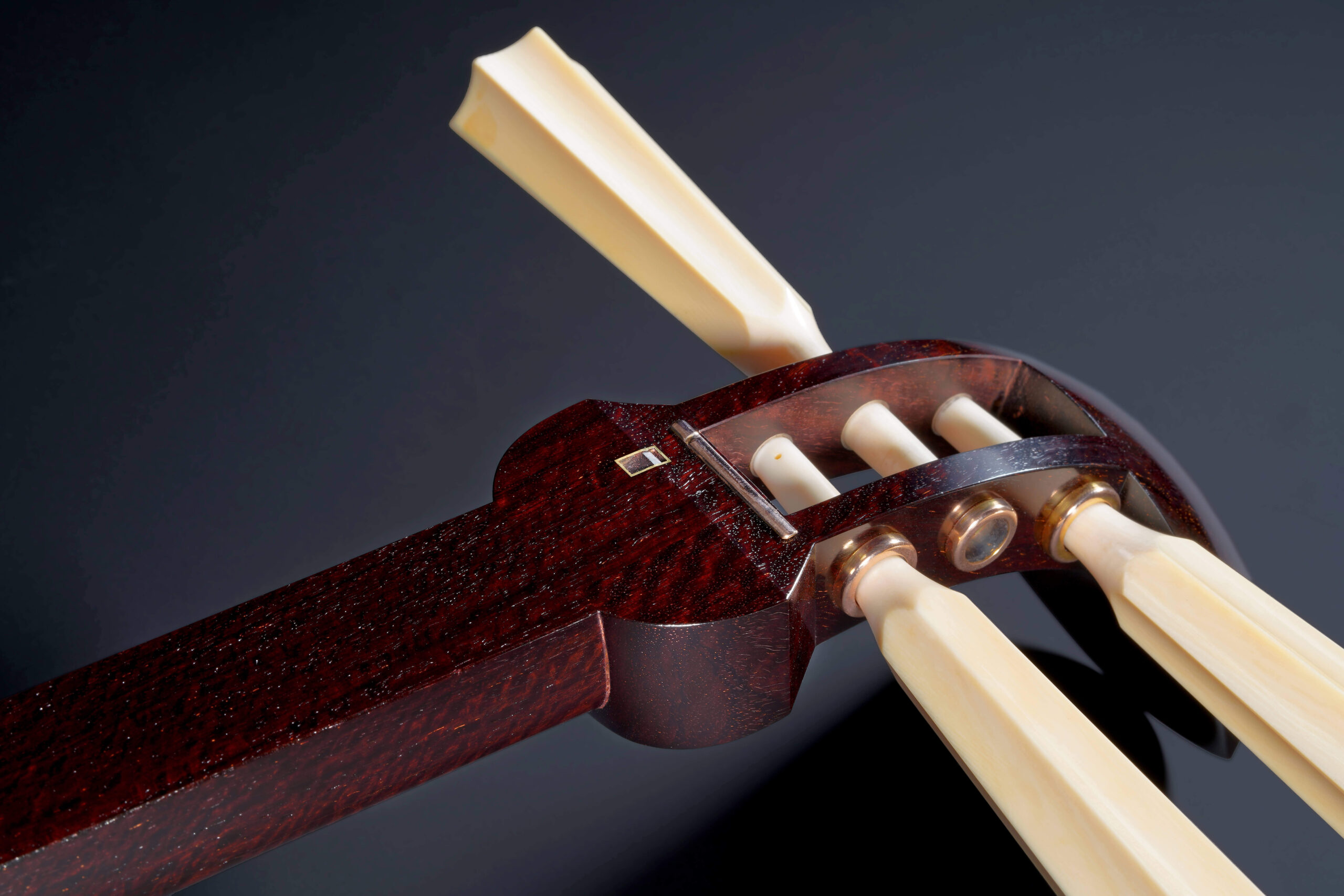
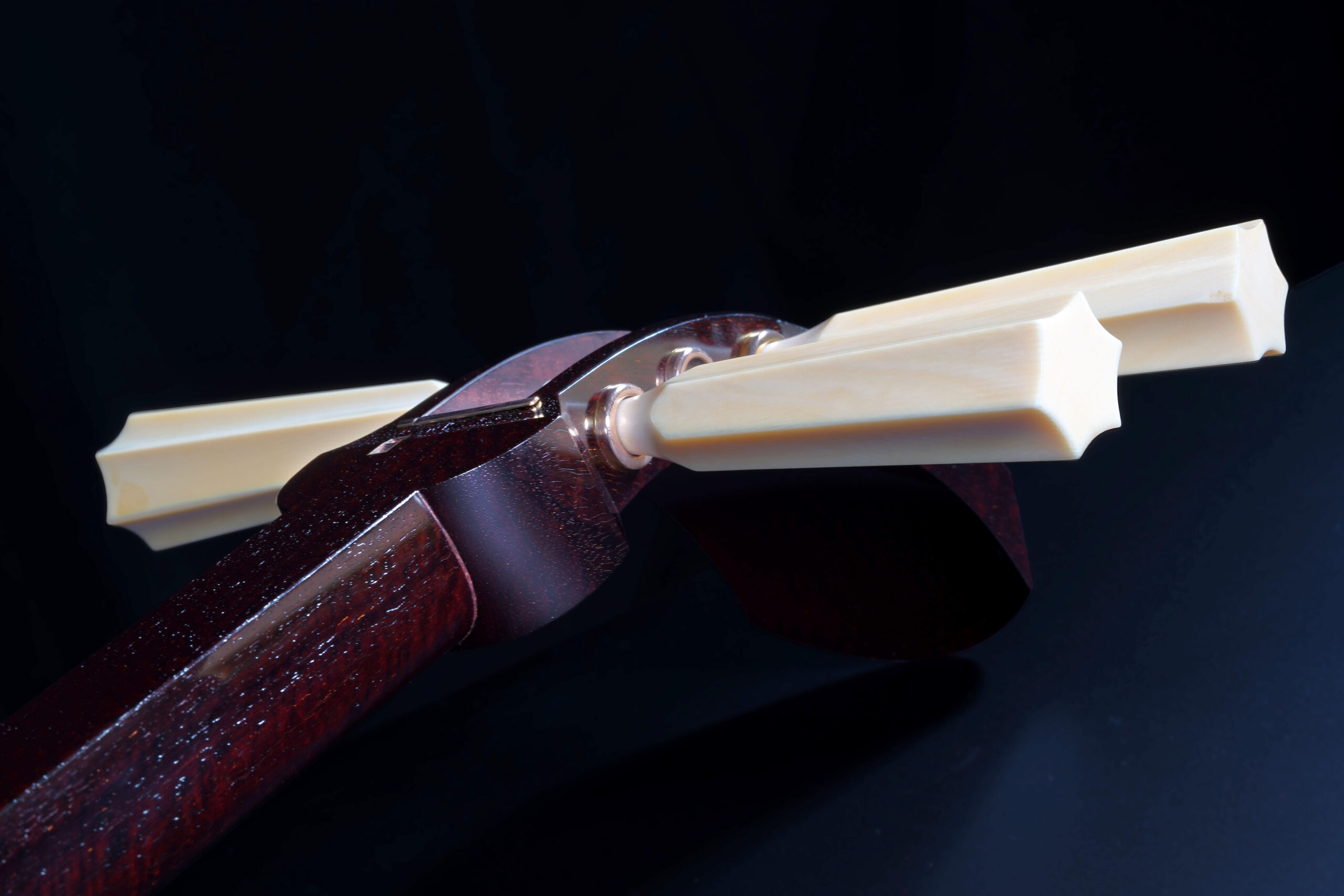
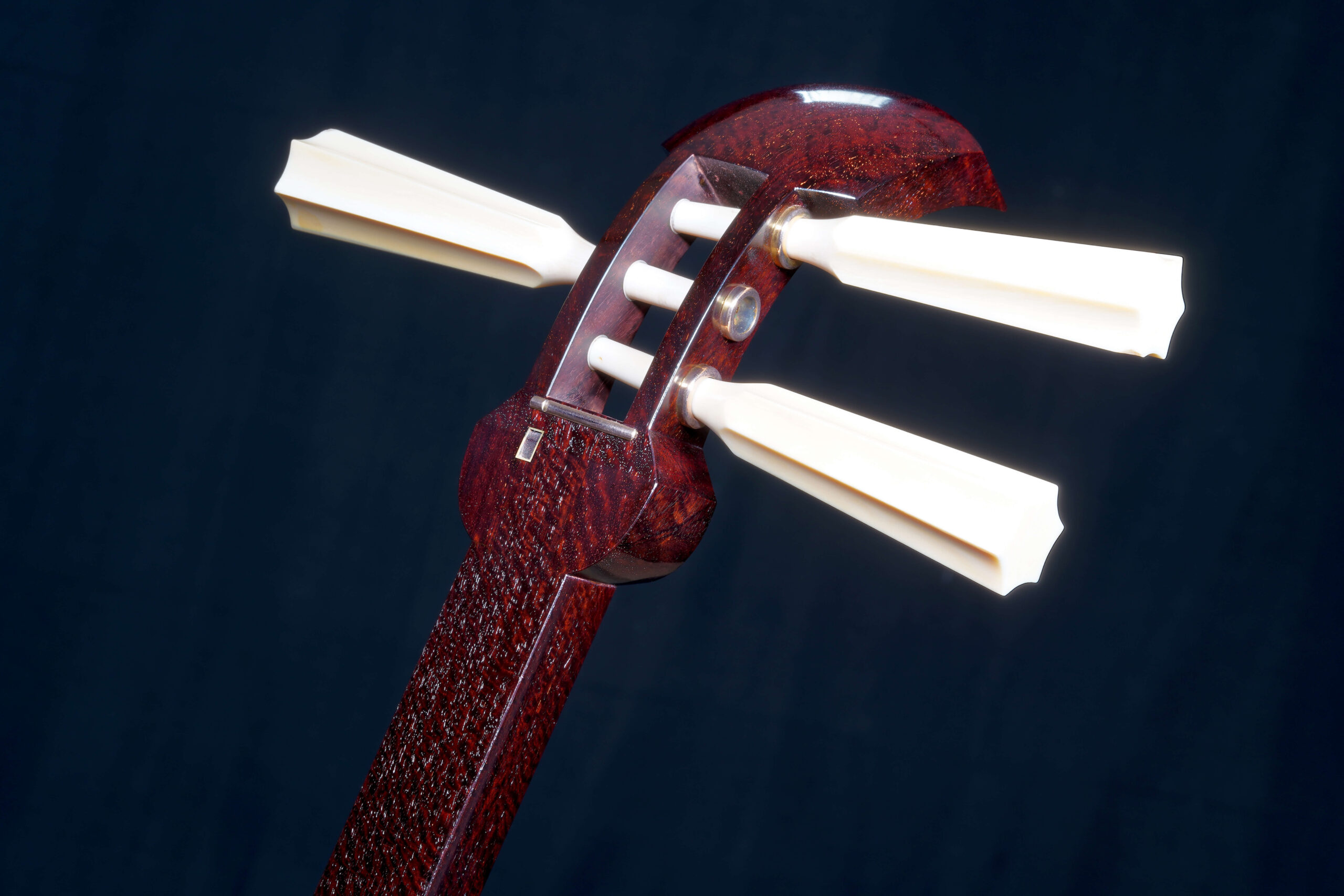
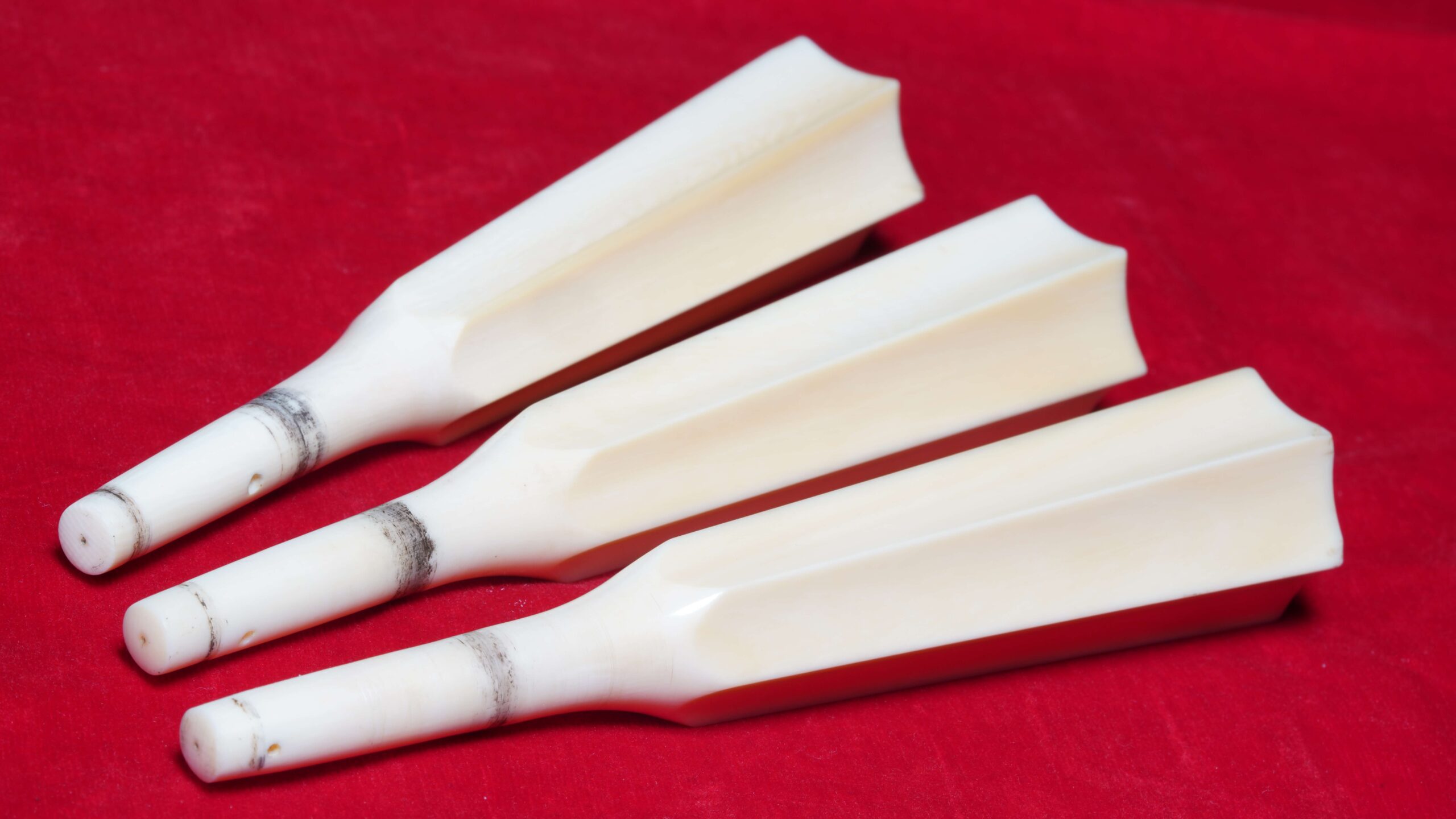
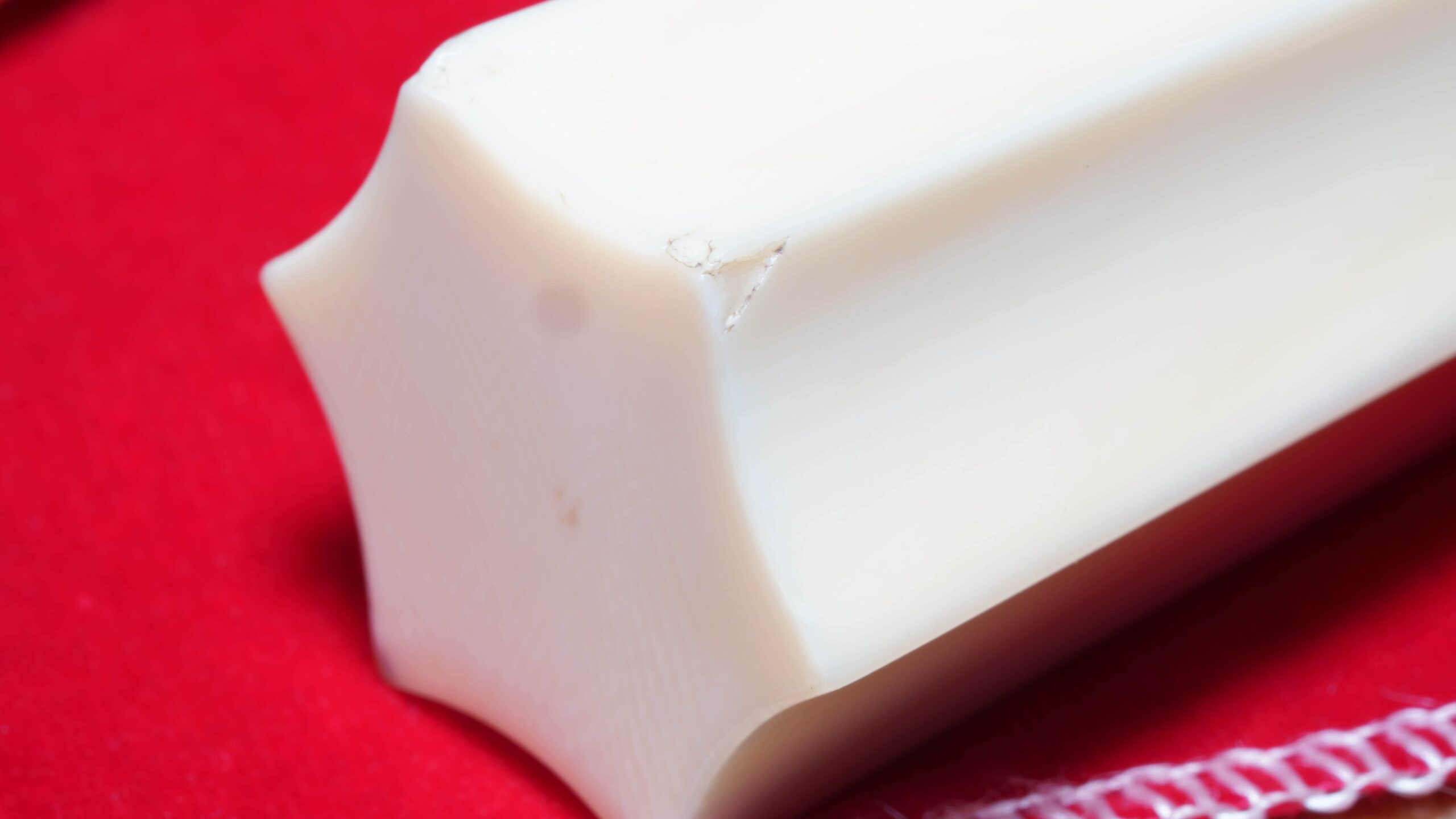
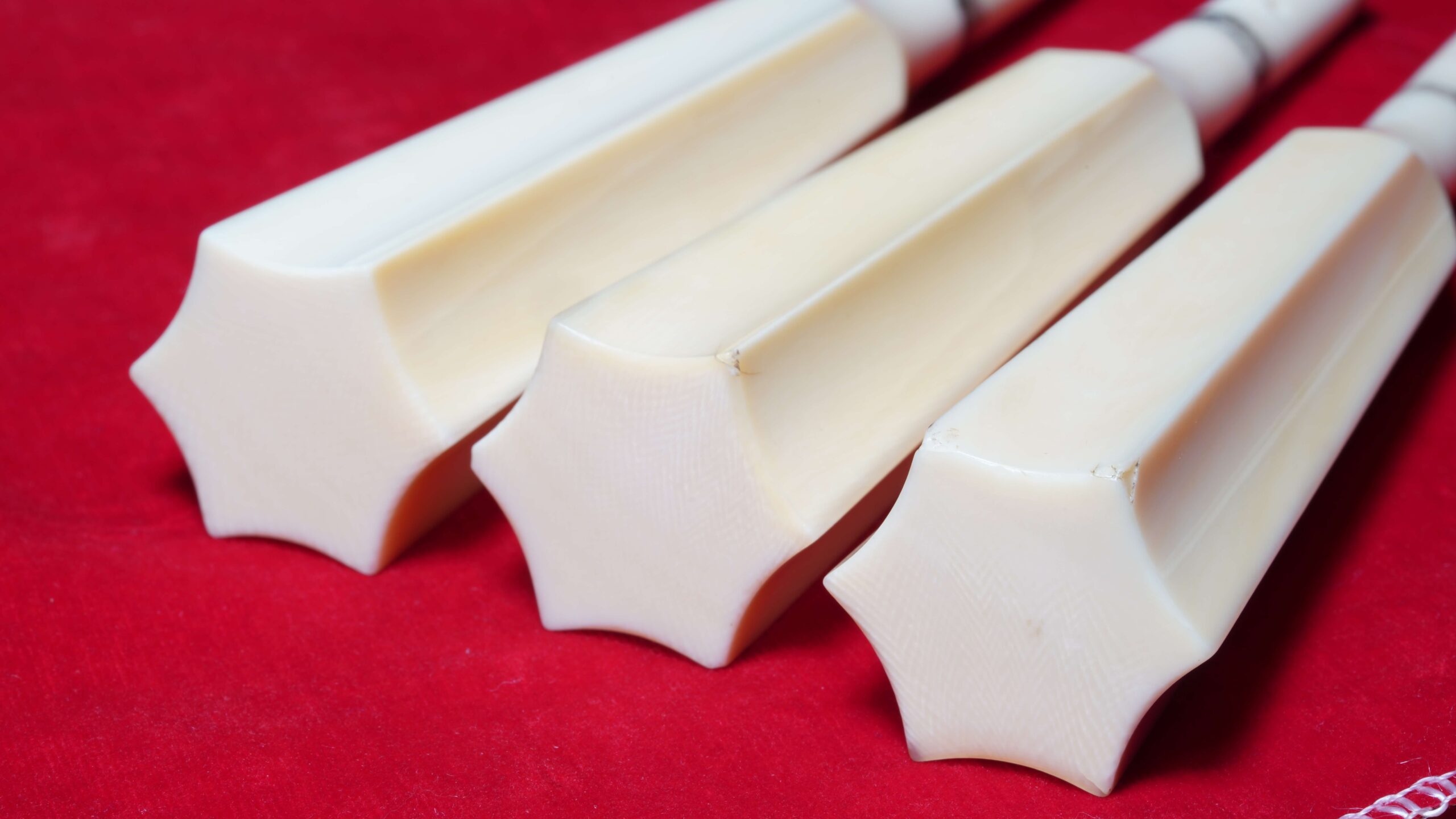
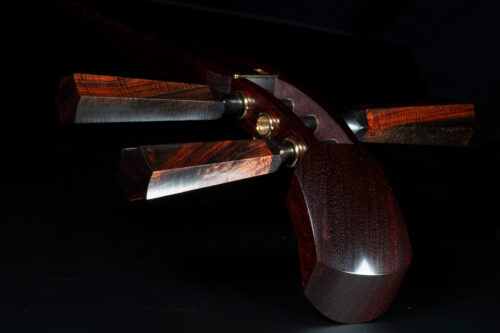
Zouge Itomaki: The original zouge tuning pegs feature minor vintage yellowing and two very small chips at the tips, which are kept as a testament to the instrument’s history. There is a small amount of specialized compound added to the zagane, which helps them turn smoothly.
-
“Mechigai”: Due to natural climate shifts during transit, a very subtle mechigai (joint swelling) may be felt if running the entire hand along the side of the joints. However, when using a yubikake in playing position, I noticed the feeling is perfectly smooth and does not affect performance. If it ever became bothersome, this could be easily fixed by sending it to Tokyo Wagakki – it’s a simple matter of finely sanding the sides of the sao by a hair width and refinishing. (It’s best to do so in the Spring, when the climate between the two locations is most similar.)
What’s Included:
-
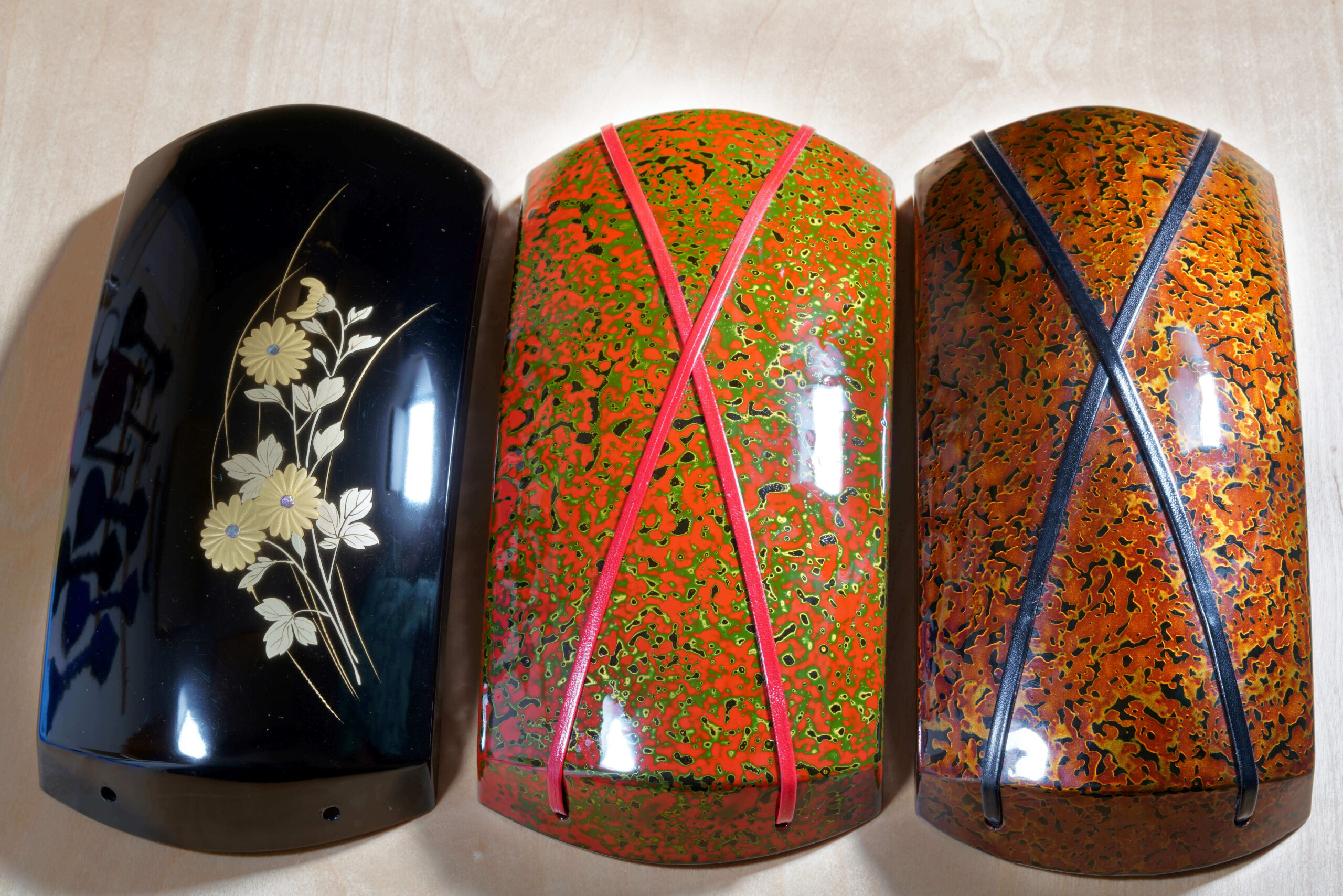
Your choice of lacquered Doukake (armrest) – choices shown in photos.
-
Your choice of Neo (string tie)
-
Your choice of Black or White Hibiki Sonic skin
Price Comparison: At the time of it’s making, a shamisen with this density of tochi and build quality would easily retail for upwards of $30,000. In an effort to respect how rare this shamisen is while making it owning it a bit more in reach, we set the price of this masterpiece at a fraction of that cost.




Reviews
There are no reviews yet.